

A Cleaner Future: Improved Cookstoves in Senegal


In rural villages across Senegal, the daily task of cooking has long come with hidden costs: deforestation, dangerous smoke, and hours spent gathering firewood. But the community of Nerane Diarrere is rewriting that story.
With support from buildOn and CREATE! (Center for Renewable Energy and Appropriate Technology for the Environment), former participants of buildOn’s Adult Literacy Program (ALP) have learned to construct energy-efficient cookstoves using only local materials like sand, clay, and millet husks. In just three weeks, they built 73 improved stoves, one for every household in the village.
The Problem with Traditional Cooking Fires
Across Africa, more than 850 million people still rely on wood and charcoal as their primary cooking fuel. The health and environmental consequences are staggering:
- Inefficient stoves release dangerous smoke, causing indoor air pollution which is linked to nearly half of pneumonia-related deaths among children under five.
- Women and children spend hours each week gathering firewood, limiting time for school, work, or rest.
- Unsustainable firewood use accelerates deforestation and increases greenhouse gas emissions.
As gas and oil prices continue to rise, the need for affordable, sustainable alternatives is more urgent than ever.
A Community-Led Solution
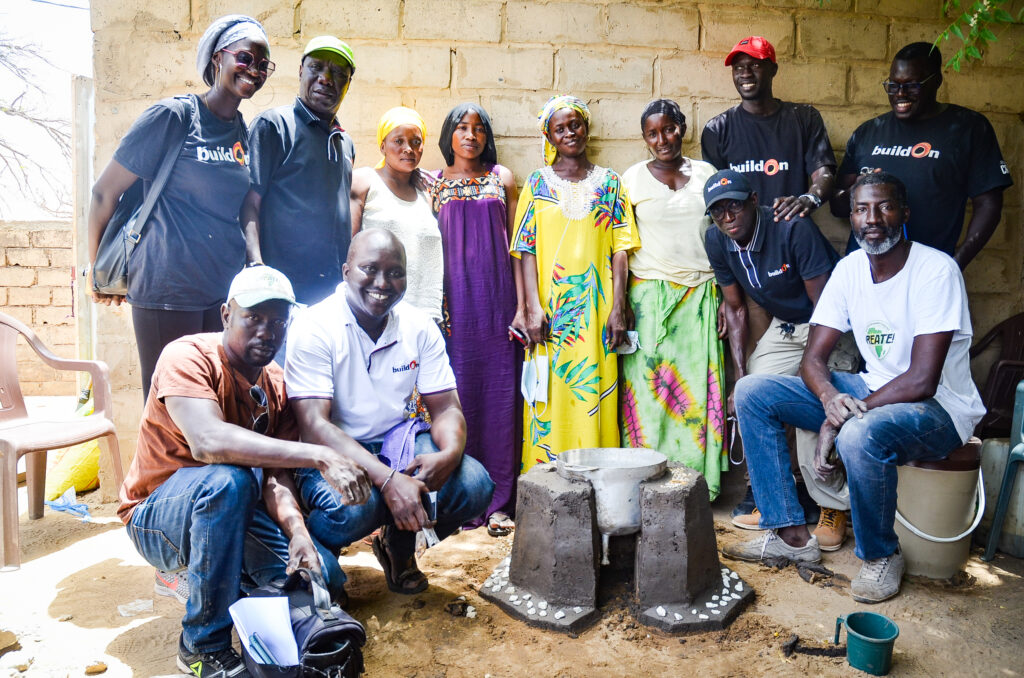
The new stoves in Nerane Diarrere are designed to be simple, efficient, and sustainable:
- 70% less firewood is needed, reducing household costs and slowing deforestation.
- Women spend less time collecting wood, freeing time for income-generating work or education.
- Improved airflow cuts smoke, creating safer kitchens for families—especially women and children.
- Skills in stove construction and maintenance open new opportunities to generate income.
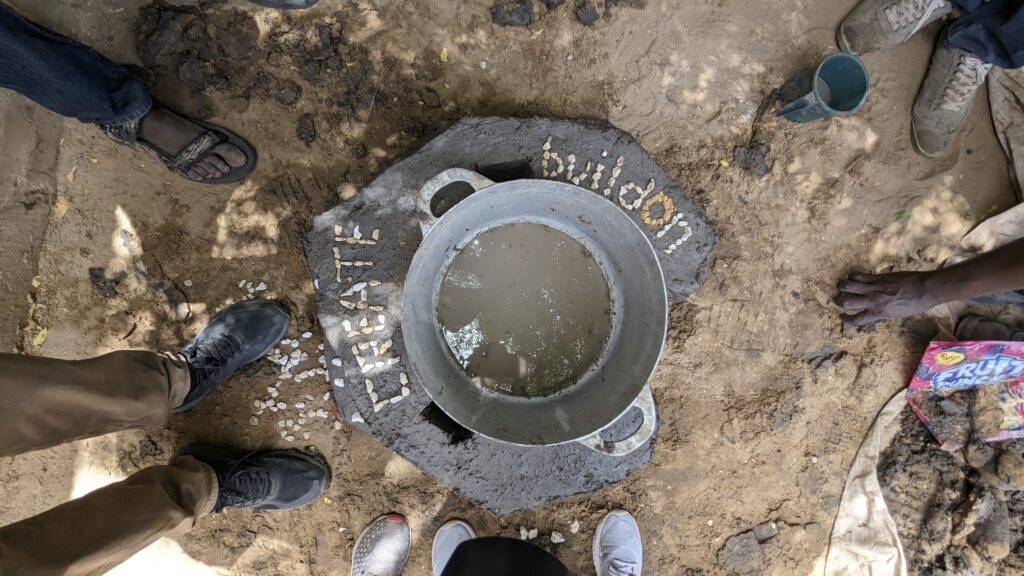
How to Build an Improved Cookstove
The people of Nerane Diarrere followed these simple steps to build their cookstoves:
Step 1: Gather Materials
Collect sand, clay, dry grass or millet husks, water, and three stones or bricks of equal size.
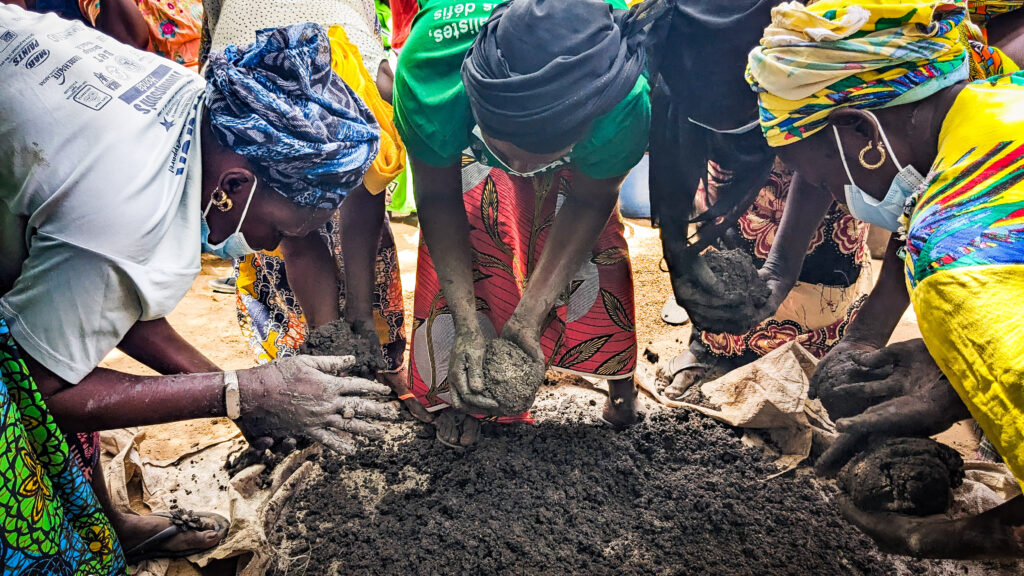
Step 2: Mix the Ingredients
Combine one part sand, three parts clay, one part husks, and one part water. Mix by hand or foot until firm, then shape into balls.
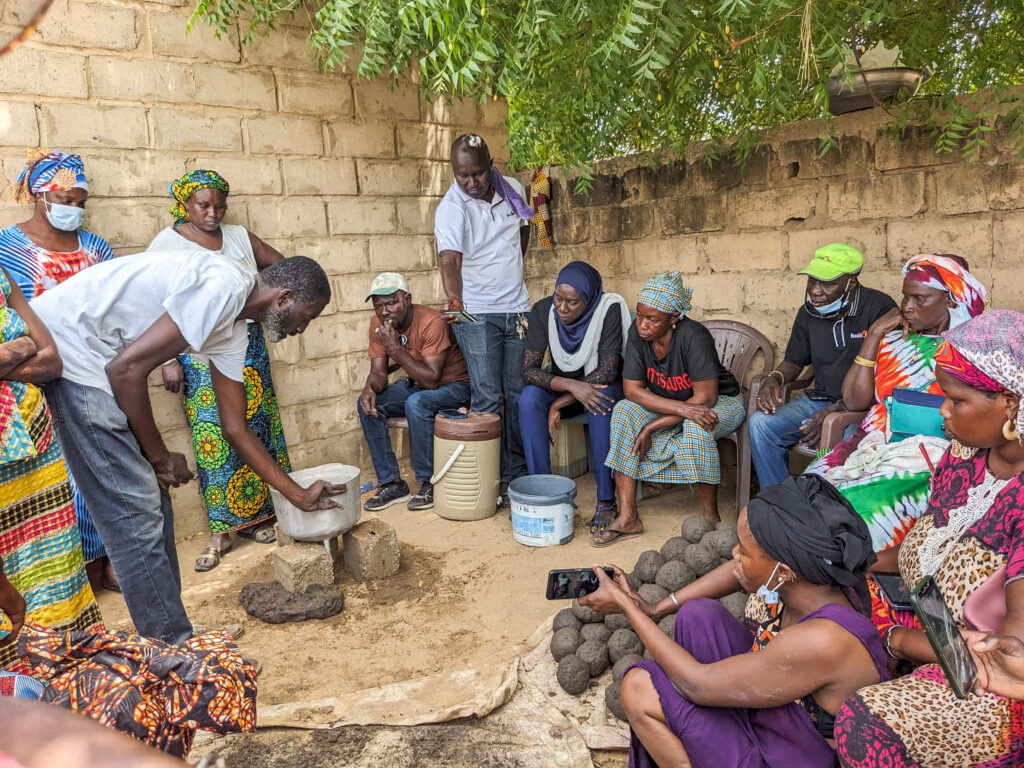
Step 3: Set the Base
Arrange the stones or bricks in a triangle to support the cooking pot.
Step 4: Build the Walls
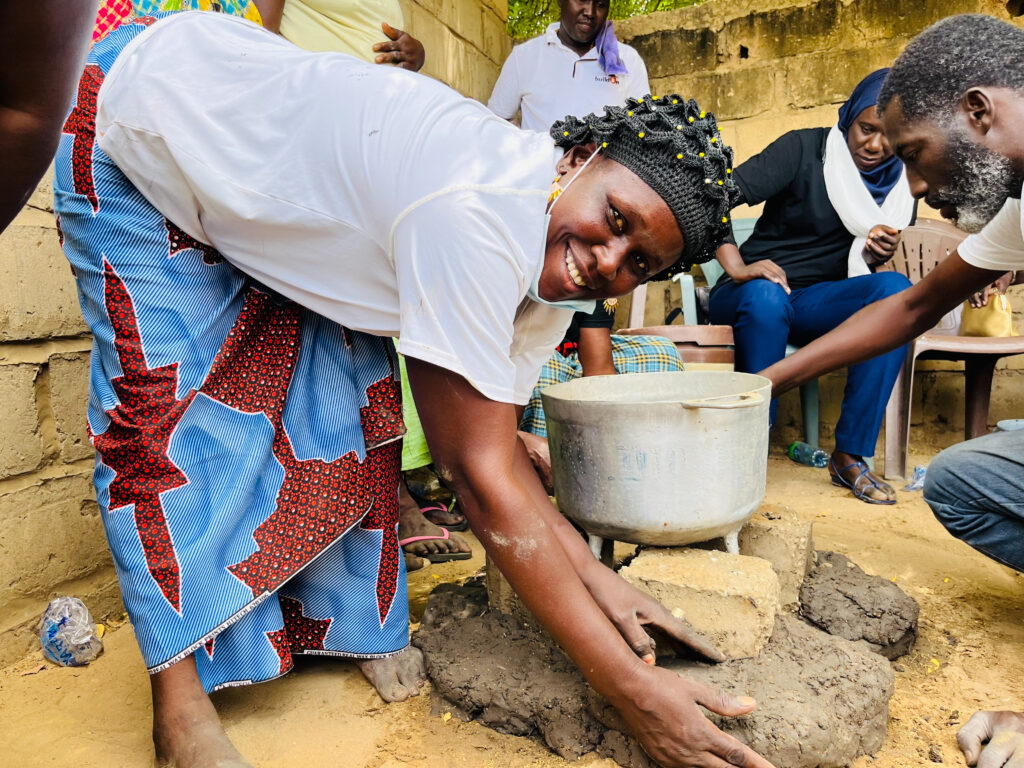
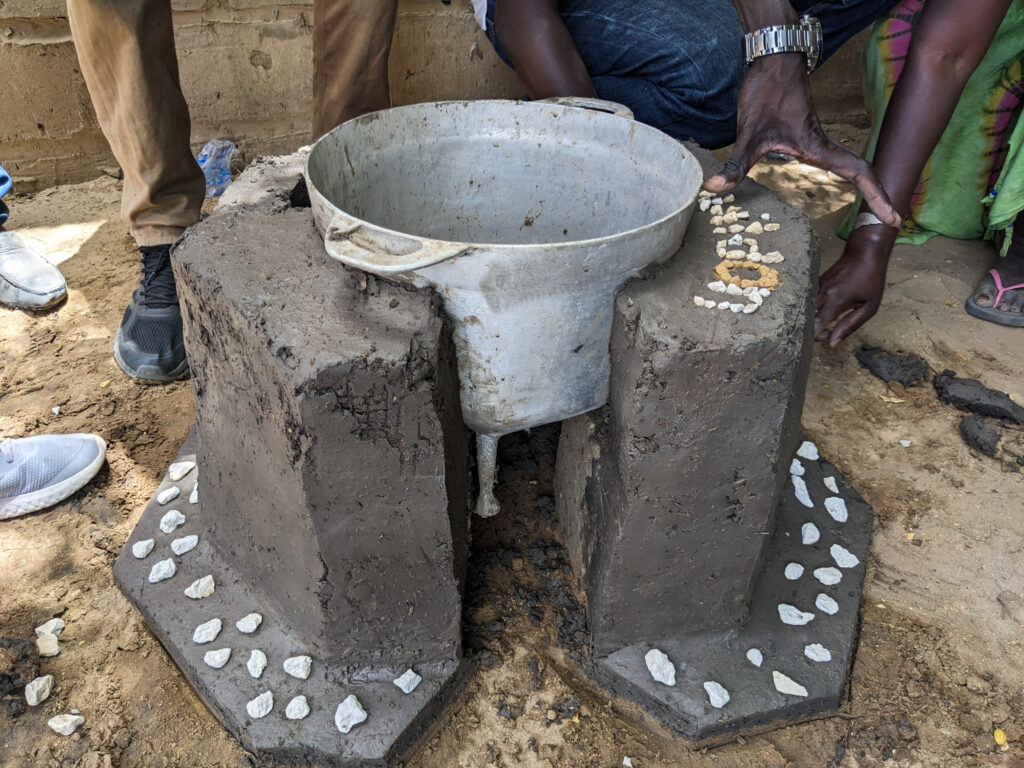
Form clay walls around the pot, about one hand-width thick. Leave a small opening for inserting firewood.
Step 5: Smooth and Shape
Smooth the walls with water. Carefully remove the pot and cut two small chimneys inside for airflow.
Step 6: Dry the Stove
Let the stove dry for three days. Remove and twist the pot daily so it doesn’t stick.
Step 7: Ready to Use
Once dry, the stove is ready for cooking—using 70% less firewood and producing far less smoke.
Built on a Foundation of Literacy and Empowerment
This innovation didn’t happen in isolation. The people of Nerane Diarrere first came together through buildOn’s Adult Literacy Program, where 126 participants—89% of them women—gained skills in reading, writing, and numeracy. With those tools plus seed capital from buildOn, they launched small businesses, from fabric dyeing to soap-making, that grew their collective wealth by 1,650% in just a few years.
The participants then put their earnings to good use, purchasing three cereal mills and helping to fund two new school blocks for their children. They also used the money they made to buy notebooks for students, cover the kindergarten teacher’s salary, and pay the school’s water bills!
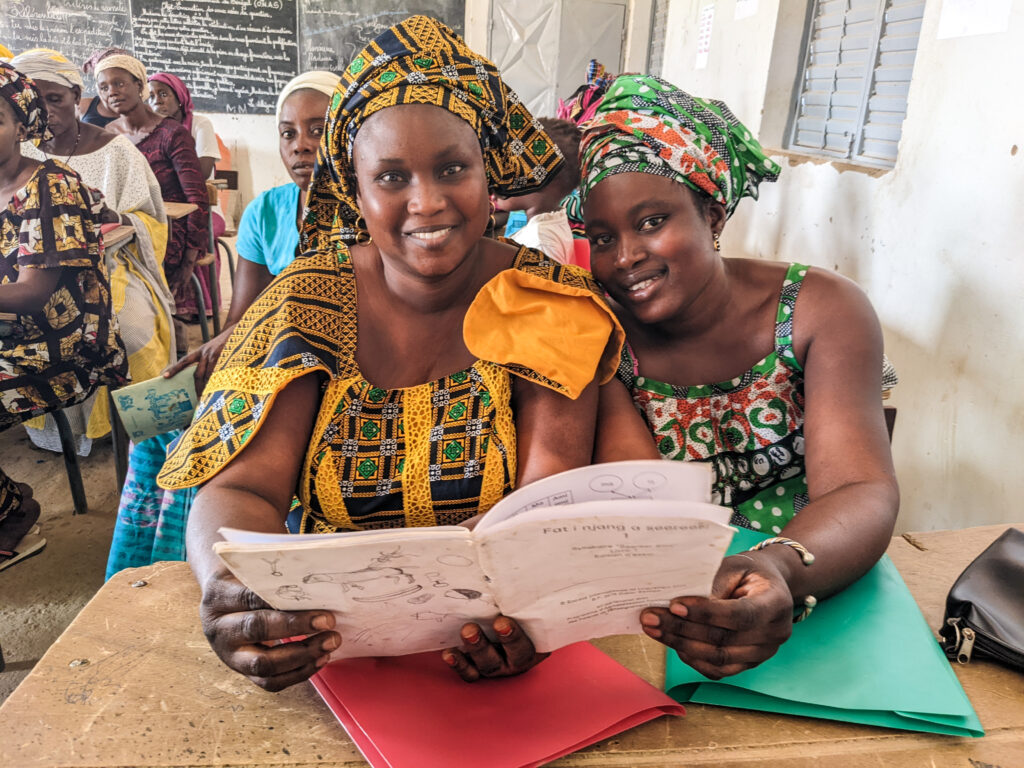
The cookstove project built on that foundation, demonstrating the ripple effect of education and empowerment. Literacy opened the door. Entrepreneurship built momentum. And now, sustainable cooking is strengthening health, livelihoods, and the environment.
A Model for the Future
What’s happening in Nerane Diarrere reflects a small win that can grow to have a big impact on both the environment and public health in Africa. By combining local leadership with simple, scalable technology, the people of Nerane Diarrere are proving what’s possible.
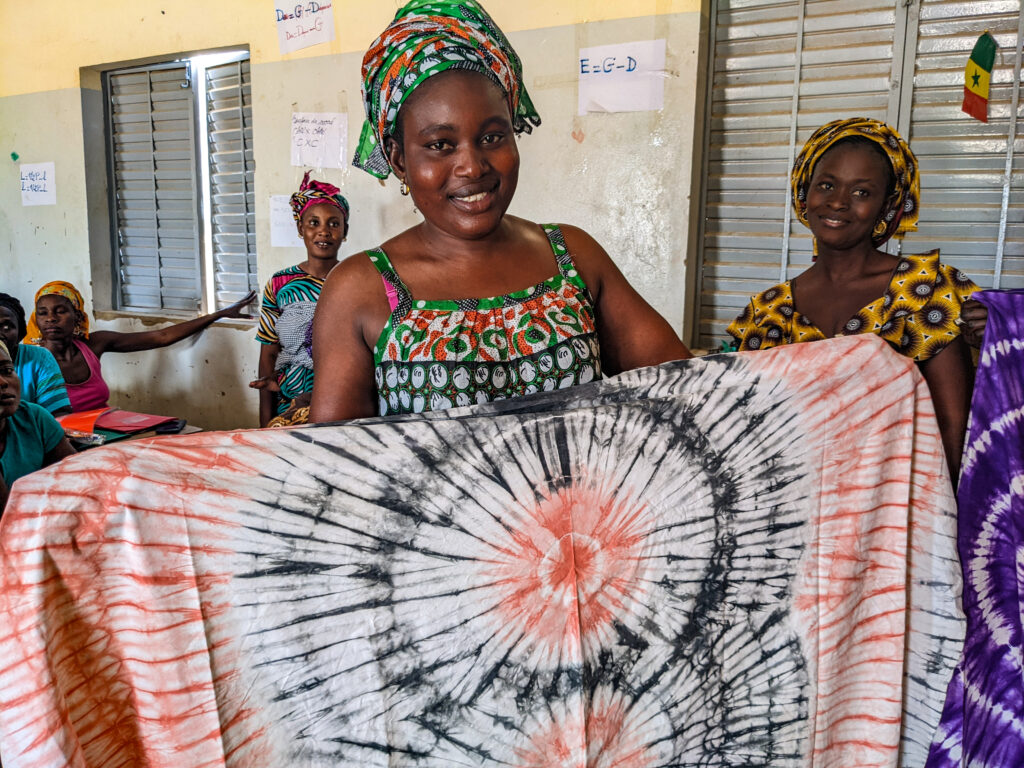
This is more than a story about stoves. It’s a story about women leading change, about communities building resilience, and about how small innovations can spark big transformations.
Want to help ignite fires of change in communities like Nerane Diarrere? Consider making a tax-deductible donation to support our transformative work.