

We Unite and Ignite: Jim Ziolkowski’s Speech at buildOn’s 2024 Gala


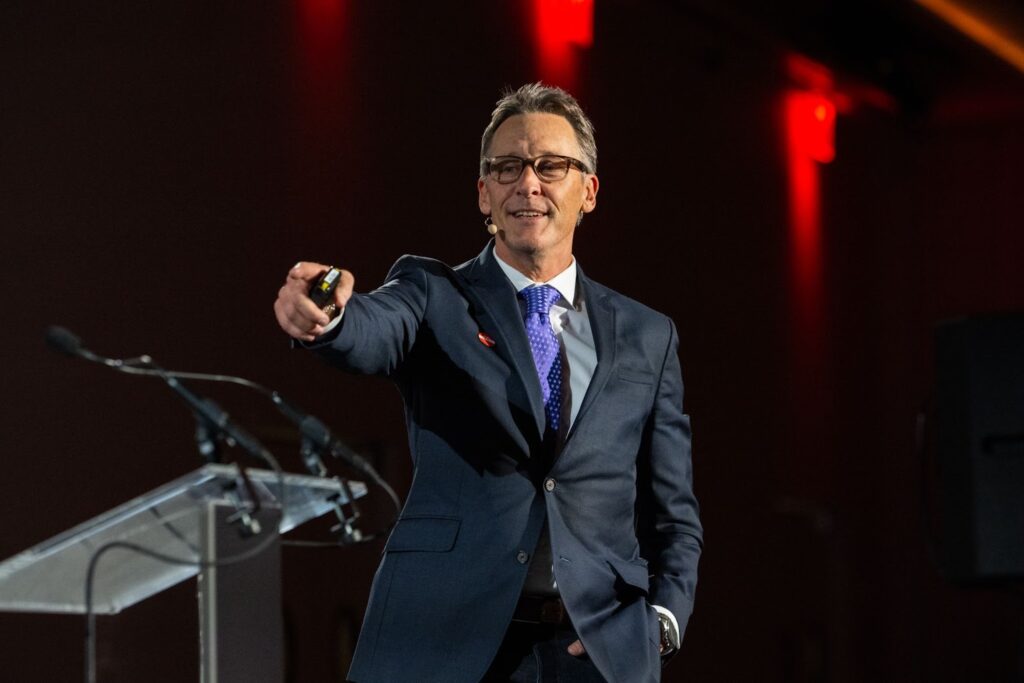
At buildOn’s 2024 Gala, buildOn Founder and CEO Jim Ziolkowski gave an inspiring speech to a packed crowd of guests. Read on to hear his inspiring story of how buildOn unites and ignites!
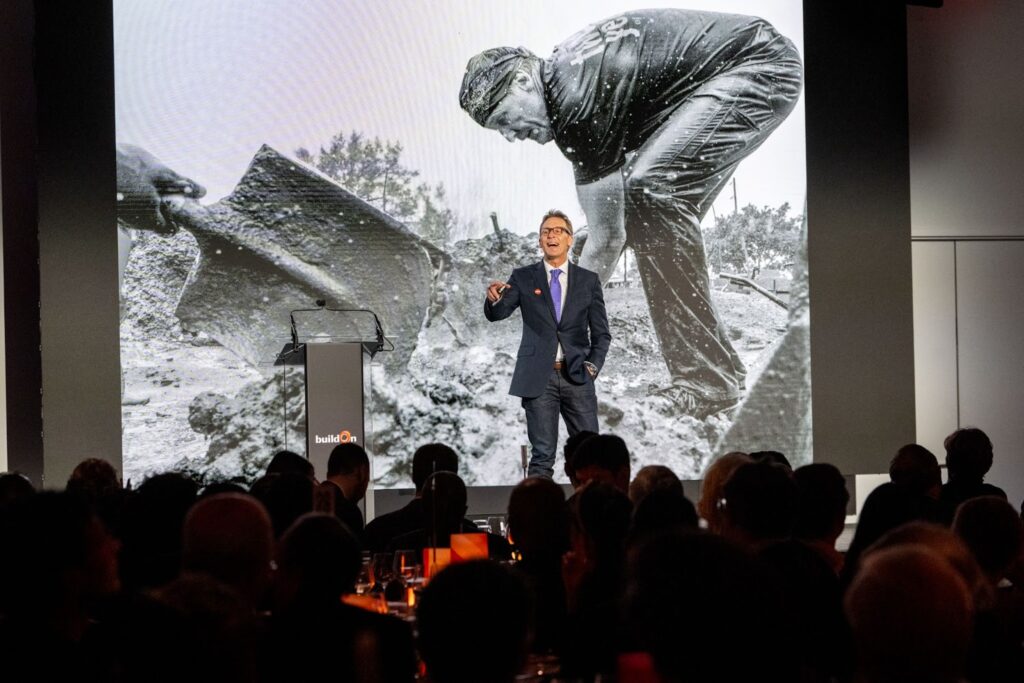
I want to thank each and every one of you here tonight for taking the time to come and support this movement. And especially Alan Murray, our honoree, for the impact he’s made in his time as a leader at buildOn. Thank you, Alan.
What is the buildOn Movement?
For the last 33 years, what buildOn does has boiled down to just three things. This is all we do:
- We unite people. We bring people together. We create solidarity.
- We ignite change. We light fires and create equity.
- We create a movement. When you have people together with solidarity and ignition, you have a movement.
I get it, these are kind of squishy terms. What is a movement? What does that mean? A lot of people call themselves movements. So tonight, I want to answer the question of what a movement is for buildOn.
Persevering Through Instability and Adversity
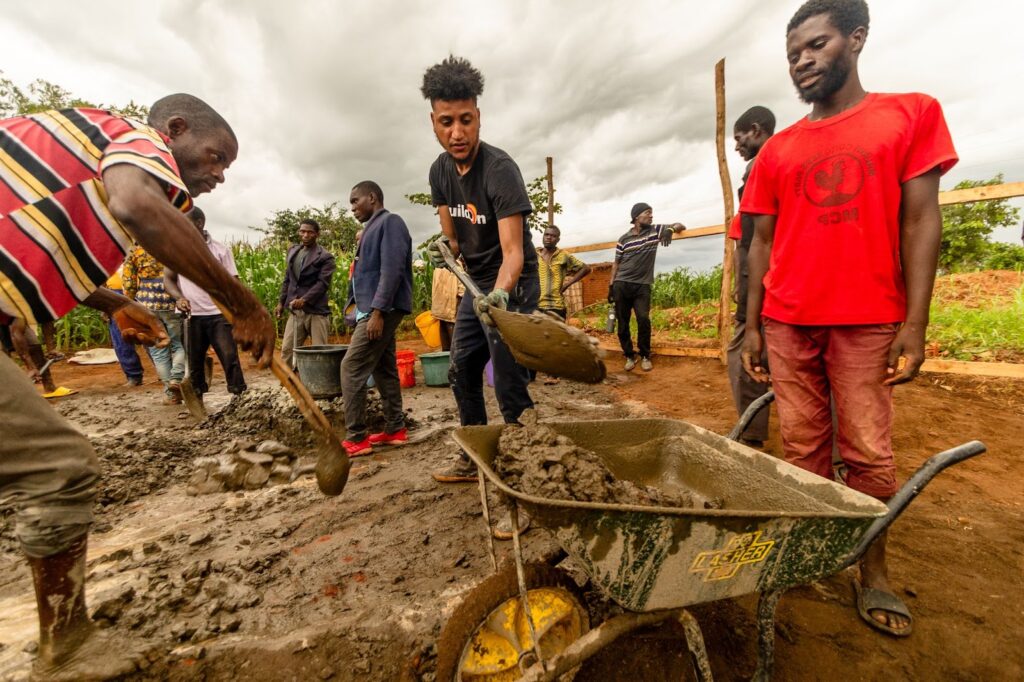
But first, I have to tell you about one of the most difficult days in my 33 years at buildOn. I was on a construction site in Malawi, Africa, a few months ago. There was a driving rain. I was freezing. I felt like I got dunked in a cold lake. There were about a thousand people living in the village, but it was just me and one other guy mixing about a thousand pounds of concrete. And I was thinking, where’s the movement? Where is everybody? My back was screaming and I was ready to throw down my shovel and give up.
You have days like that at buildOn, and we face some existential challenges. Right now, we’re working in Haiti, yet Haiti does not have a functional government because it’s been taken over by gangs. And yet, we have five schools under construction there right now. That’s what we mean by solidarity—people and communities unite.
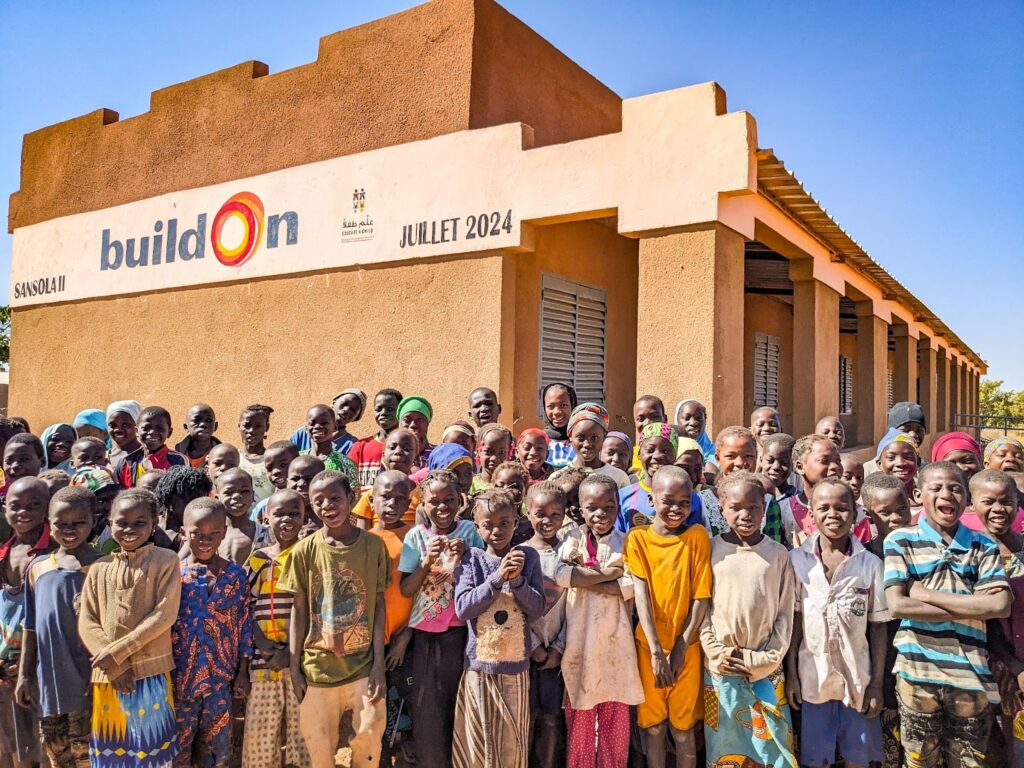
We’re also building a lot of schools in West Africa. We’re in three countries in West Africa, and in two of them—Burkina Faso and Mali—there have been three military coups in two years. But during those two years, we did not stop what we were doing. Our communities were united. We built nearly 200 schools in those two countries alone during that kind of terrible adversity. That’s what can happen when people come together.
And there’s all sorts of other things going on in the world right now. There’s a war in the Middle East. There’s a war in Ukraine. There’s a war in Sudan. And that affects us profoundly. So, I want to take a little bit deeper look at what happens when the world is at war. And I want to start by experiencing this through the lens of Mohamad, an 11-year-old boy in Syria.
Mohamad’s Story: War and Upheaval in Syria
Mohamad turned 11, and that was the same year that a massive civil war broke out. The dictatorship was fighting ISIS and Al-Qaeda and all kinds of different militias. And the country was just completely destroyed. This little boy’s grandfather was driving his car, and he got blown up by a fighter jet. And then his uncle was walking down the street and he got killed by a sniper. Neither of them were involved in the war. His father left the country and went to Europe, or something, nobody’s quite sure.
His mom’s got Mohamad and his five siblings. So six kids. And she was terrified. She didn’t know where she was going and what she could do to save her children’s lives. Everything was coming unraveled. And she somehow was able to get access to an old car, and she decided to pack these kids in the car and drive them across the country to the border with Turkey. She wanted to get to Turkey to get out of the war.
She had these six kids, and bombs were going off. It was about 110 degrees. Her oldest boy was 19. He had to ride in the trunk, because every time they went through a checkpoint, if the soldiers saw him, they would abduct him. They would force him to fight in the war and die. So she was afraid for the lives of her kids.
They made it through these checkpoints. They made it through this road from hell, and they ended up on the Turkish border. But there were tens of thousands of people there ahead of them. They had to get in line behind them. And it was chaos. It was total mayhem.
We can’t rescue these people. We’re not a charity and we’re not building schools in Syria. So why am I talking about Syria? It’s a smaller world than you think. And I’ll explain it in a few minutes.
How buildOn Handles Challenges in the U.S. and Abroad
Now, we have our own challenges on the southern border in the United States. Tens of thousands of people want to cross our border too. And over the last year, more than 95,000 people have been bussed up to New York City from the southern border. And these folks don’t have enough to eat. I was at a service project in the South Bronx, and there was a line, two and a half blocks long. All these people had emigrated from Haiti, from Venezuela, from Colombia, from Guatemala, Honduras, all these countries, and they were in distress. They got bussed to New York. They landed in the South Bronx. They have no food. 350 people. What can we do for them?
We can’t feed all these people. What is it that we do? We’re not a charity. We’re not trying to rescue anybody. What we want to do is unite communities, unite people, and get them together through service and education and ignite change—light fires of change to create equity in the world. That’s our ultimate impact.
How do we do it? We mobilize students from under-resourced high schools around the country to transform their own communities through service. The kids step up—they do this. And these same students help to build schools in some of the economically poorest countries on the planet. That’s how, and here’s the movement, again. We’re a movement.
What do we mean by movement, ladies and gentlemen? This is what we mean by movement:
- 200,000 kids have contributed 2.5 million hours of service.
- We’ve built 2,746 schools around the world.
- But the more important metric is that community members have contributed 5 million volunteer work days to build these schools.
They organize leadership committees—six women and six men. They mobilize their communities and they build these schools. This is what we call a movement. This is what we mean when we say ignition. This is what we mean when we say solidarity. People are coming together. But these are just metrics. These are just numbers. So I want to dive in a little bit deeper and try to bring them to life.
Feeding our New Neighbors in the South Bronx
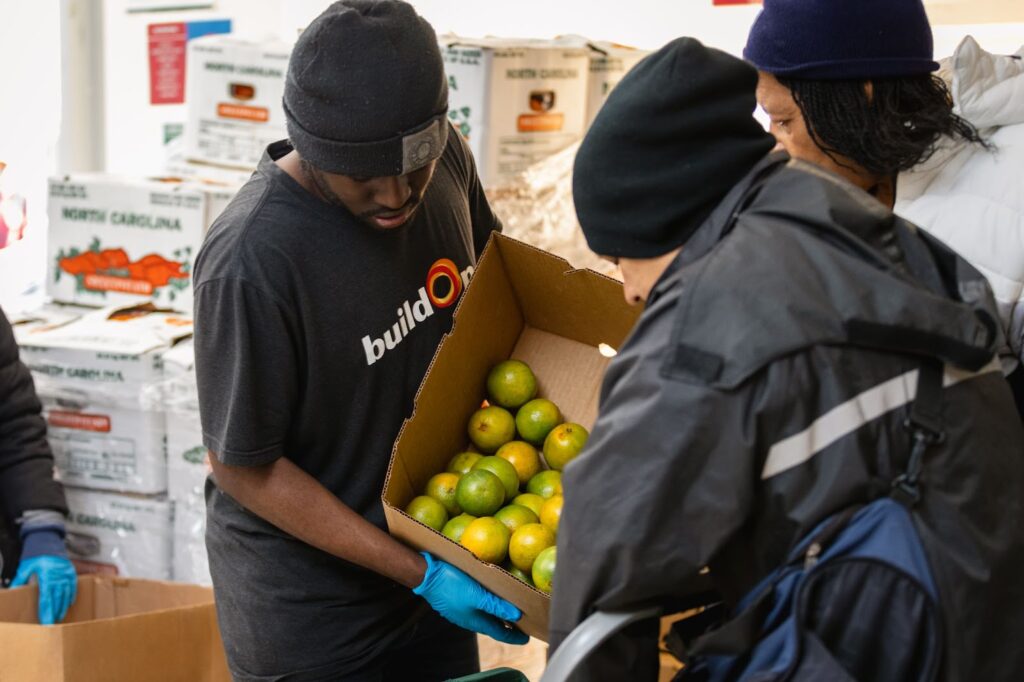
So, back to the South Bronx. What were we going to do with a line two and a half blocks long? 350 families were there and they didn’t have enough to eat. What could we possibly do? We could feed them. And we did! We unloaded two truckloads of donated food. We unloaded the donated food, organized it, sorted it, and set it up. We teamed up with a storefront church and they moved the chairs out. We got it ready for people to come in so we could feed them. Everybody was going to take a couple bags of groceries home with them.
And the coolest thing was that these people are from around the world, these immigrants, and they were desperate. And standing to my right was a girl named Jackie. And her family emigrated from Mexico. To my left was Aissatou. Her family emigrated from West Africa, and they landed in the Bronx. And it’s likely they had to come and stand in the back of these lines. But now, they were standing in the front of the line and they were sharing the food. They were being empowered by their own compassion. That’s what it’s all about.
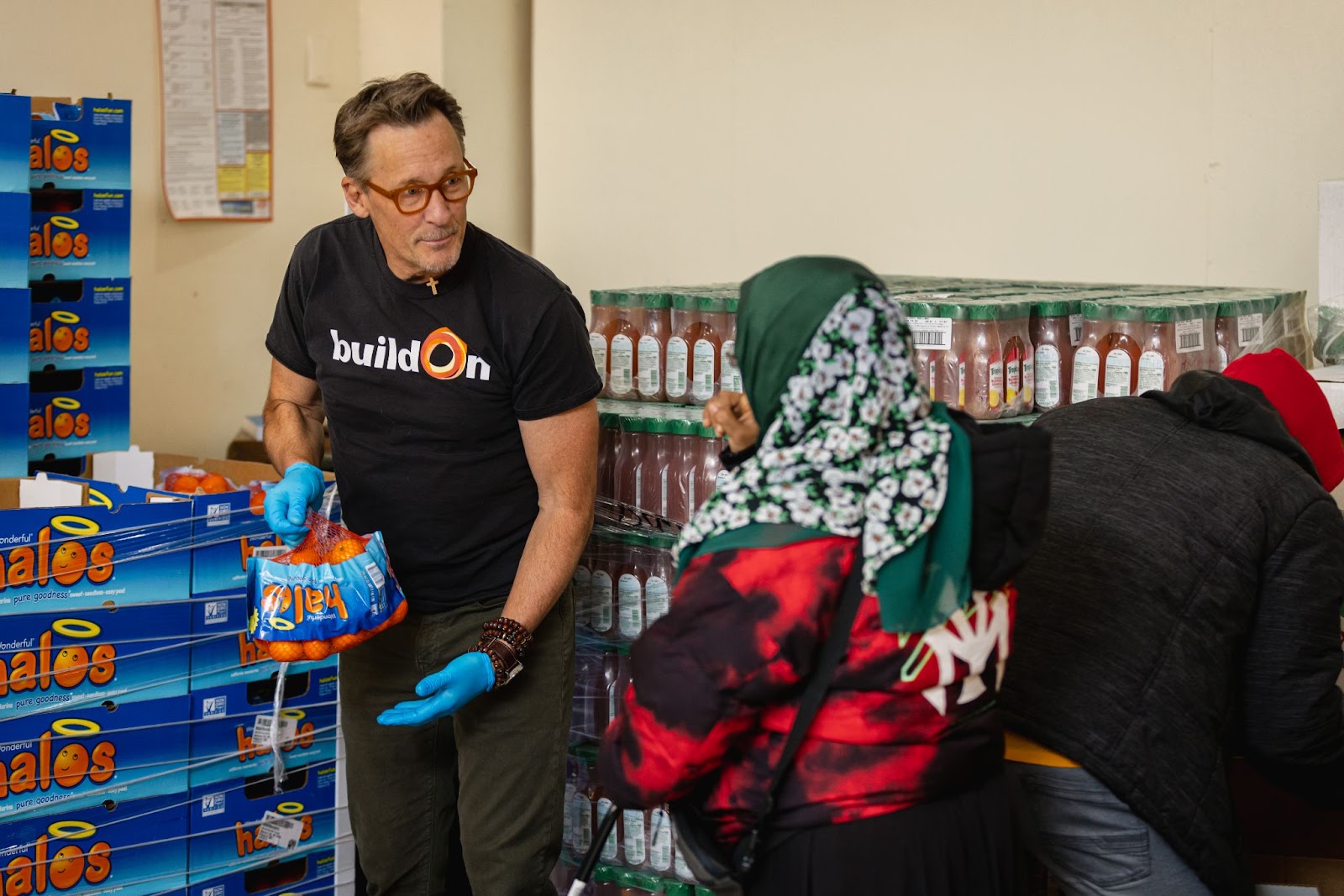
So then the people came in and it was amazing. Before we gave out any food, we greeted people, and we looked them in the eye. We let them know that we could see them. So many of these people feel invisible. They’re on the street, and everyone looks away. We made sure they knew that we could see them. We welcomed them. We told them that they were an important part of this community.
buildOn’s Impact in the U.S.
And that is what happens when students are empowered through their own compassion. The impact on the students is just as dramatic. Statistically, we have metrics on 22,000 kids. When students get involved in buildOn,
- They come to school on average 15 more days per year.
- They graduate at incredible rates. 98% graduate high school.
- 80% of the kids that get involved in buildOn go to college.
- They earn more than $500,000 over the course of their lifetime than they would if they dropped out.
Sometimes, this is the difference between being above the poverty line in the United States and below it. And that changes everything.
The best part of this is that when we build all these schools around the world, we actually go out and live in communities and build them. I got to go with the same kids I was doing service with in the Bronx to Malawi, Africa, to build one of these schools. We’re building schools in Haiti and Nicaragua and Guatemala. We’re in Nepal, Burkina Faso, Mali, and Senegal. But this trip was to Malawi.
A Transformative Trek in Malawi
When we arrived at the community, Chidima, we could barely get off the bus. The bus got stopped a quarter mile from the village because swarms of people had come to greet us. We walked out into this amazing sea of people that are celebrating our arrival, celebrating the fact that we’re going to build a school. I’m not too good with selfies, but I had to try to take one.
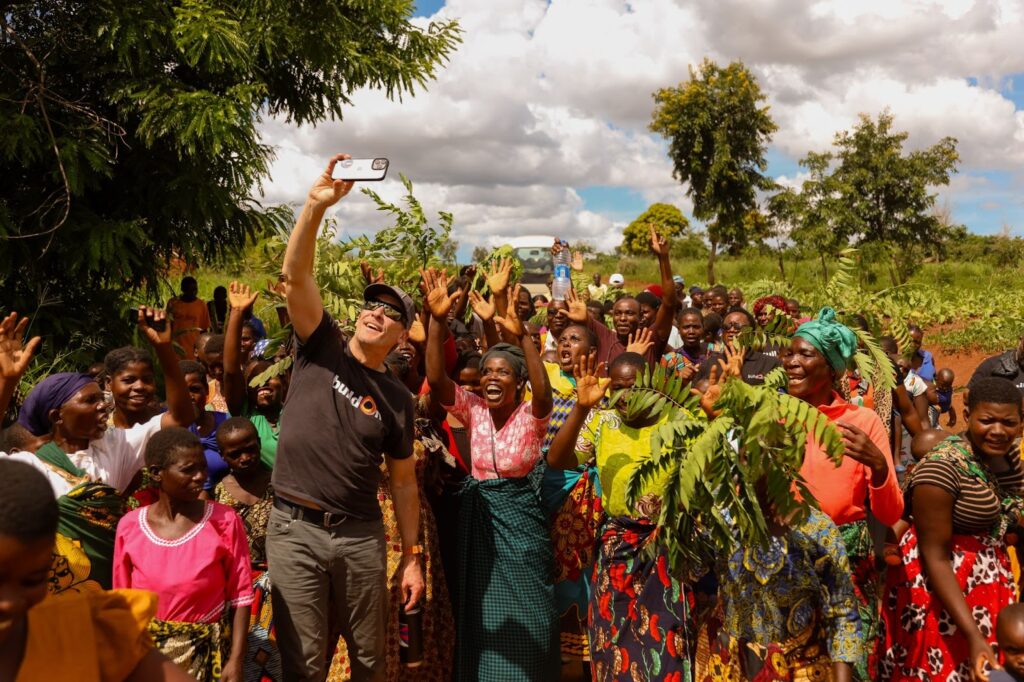
So we got to the center of the village, and Jackie and Aissatou were right there immersed in this crowd. These kids that were doing service with me in the South Bronx, and now they were in Malawi building a school. That is change. That is lighting fires.
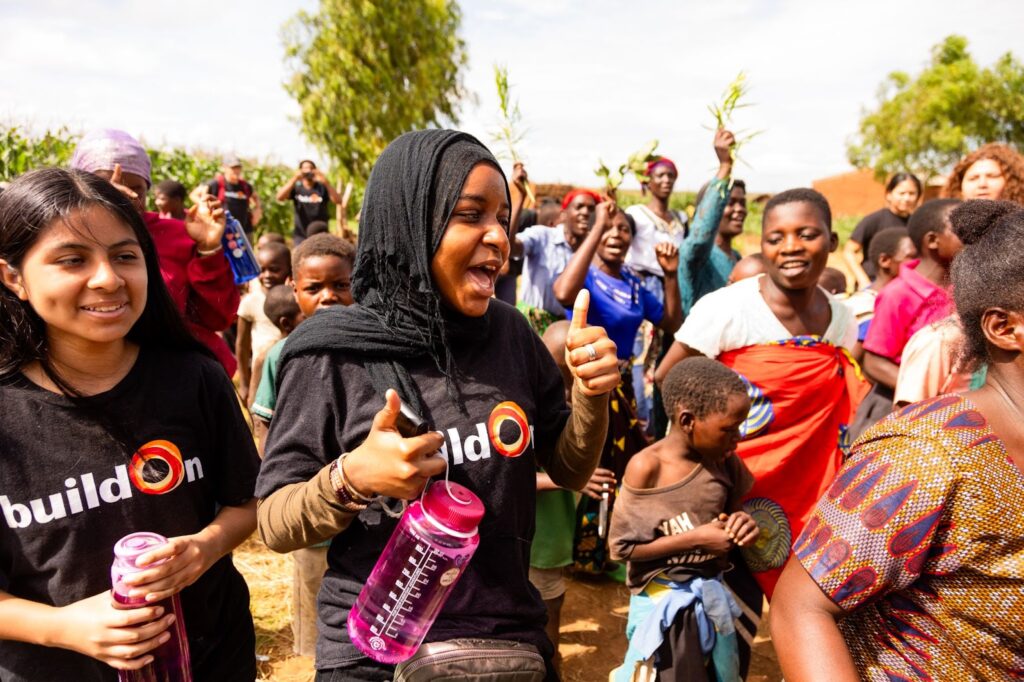
We got to the center of the village, and there were at least a thousand people there. I don’t know how many exactly, but I climbed up on top of this seven foot high pile of sand way over my head to see everyone. I wanted to take a picture again with my phone. I was on a roll. So I was trying to take this picture, and I looked up and there were all these people sitting on a wall.
And I thought, what the heck? And I looked closer and realized—it wasn’t a wall, but a kiln of 50,000 bricks. The community had hand molded and burned 50,000 bricks before we arrived. And they weren’t for the school, they were for the houses that they were going to build for the teachers that were coming to teach in the school. This is how motivated they were.
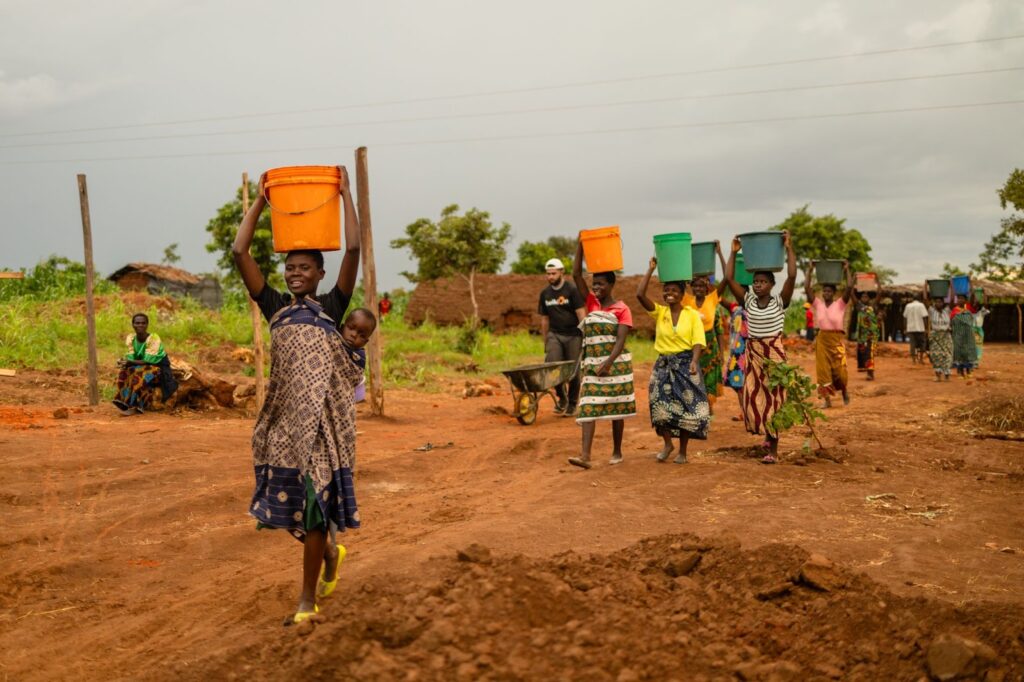
I was standing on this pile of sand. I said, “wow, this is great. Can we use this to make concrete to build the school?” And the people in the village said, “yes, yes, of course. That’s why it’s here.” And I asked them where it came from, because the roads in the village weren’t big enough for big trucks to get through. And it turned out that they had walked a mile to the nearest river with five gallon buckets, filled up the buckets with river sand, put the buckets on their heads, and brought them back to the village. A lot of them had babies on their backs and were singing songs as they went back and forth dumping the sand, bucket by bucket, to create a massive pile. This is what community is. This is how fired up they were about the school. We weren’t even there yet!
So we signed the covenant and the next day we got out on the work site. On our first day, we asked for 30 volunteers per day. We had 130 volunteers the first day. We dug the entire foundation in about four hours, which has to be a record. And I was working side by side with these community members. A lot of them had babies on their backs, and I couldn’t keep up with them. It was humbling. And when you’re there, you realize that you are in the presence of greatness. You realize that you are in the solidarity that’s been created, and it’s powerful.
One of our alumni came on the Trek to help support the younger students. And he was a beast. He was moving the wheelbarrow, pushing it uphill through sand and everything. And he was also mixing hundreds of pounds of concrete. He had a 100 pound sack of cement on his shoulders. I tried to pick that thing up, and I just took four steps and I almost fell over. I dropped the cement.
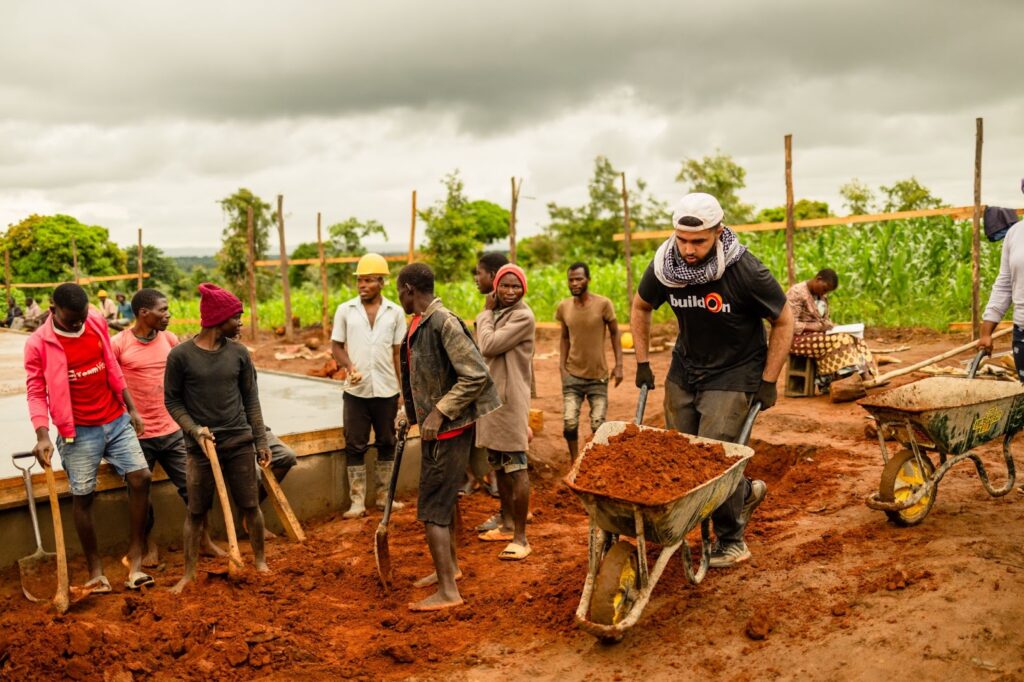
He never stopped, and he didn’t say much. So I asked him, “what is your motivation? What is making you go like this?” And he said, “it’s a long story.” And I said, “well, we’re in the village for 10 days. We’re gonna be working. So we have time. Just start by telling me why you joined buildOn when you were a kid.” And he said, “well, you know, I grew up in Syria, and when I was 11 years old, a civil war broke out.”
This is Mohamad. This is the kid whose mother threw them in a car with her.
How Mohamad Found buildOn
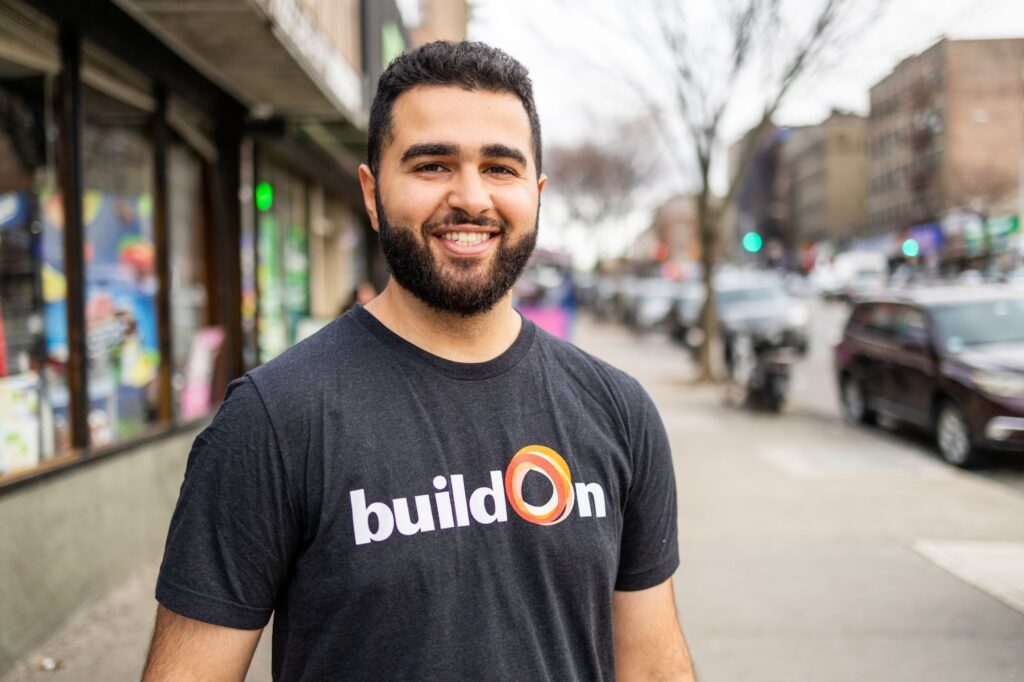
He and his five siblings traveled across Syria with bombs going off. They made it to the Turkish border, and they were stuck there. There were at least 10,000 people there ahead of them. So I asked him, “what happened? How did she get you through?” And he told me, “I don’t know, I was 11. But she got us through—we made it to the US Embassy. She was able to get us tickets to the United States.”
They landed at JFK Airport, and they had nothing but two duffel bags full of clothes. They had no money, no place to sleep, no food. And so somebody put them on a bus and they ended up in the South Bronx. They signed in at a homeless shelter, the East Side Settlement House. And they didn’t sign out for two years. They lived in that shelter for two years.
So I asked, “how was that?” Because right now, one in eight students in New York City public schools have lived in a shelter. It’s a staggering number—146,000. “It sucked,” he said. “The worst thing was that I couldn’t leave my room because I was a little boy and there was all this fighting in the hallways. And then, on the first day of school, I was excited to go, but when I walked out the front door, some kid from school saw me,” Mohamad explained. “And when I got there, he outed me as living in the shelter.” So he started getting bullied. And he fought back, but he was just a little boy. Then they found out his name was Mohamad. So they started calling him “terrorist.” And he said, “this went on for three years. After my ninth grade year, I’m like, I’m done. I am not going back to school.”
And I said, “well, obviously you did, but what happened?” He replied, “I don’t even know, Jim. The day before the first day of school, I was sure I wasn’t going to go. And then I got up the next day and something drew me. I went. And these people wearing buildOn t-shirts were standing near the entrance. They greeted me and invited me to join buildOn. And I joined. And that changed everything,” he explained. “I felt like I became part of something bigger. Like I found my people, I found my voice.”
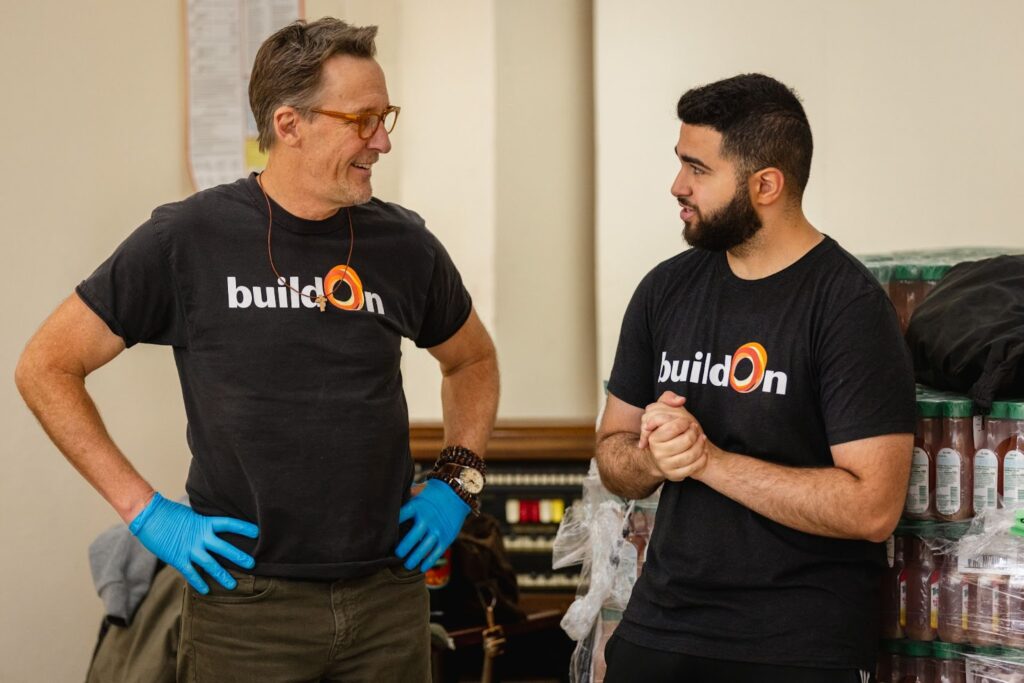
He went on to do hundreds of hours of service with buildOn and built a school in Senegal as a high school student. And now he was in Malawi, Africa, helping young students from the Bronx to get through this experience, to rise up and completely embrace it—just like he did. It’s amazing. And he was the one who was serving people in the same lines where he and his family used to have to go to get food. He is empowered. We are empowered by our own compassion. All of us can be empowered by our own compassion, the way Mohamad was and is.
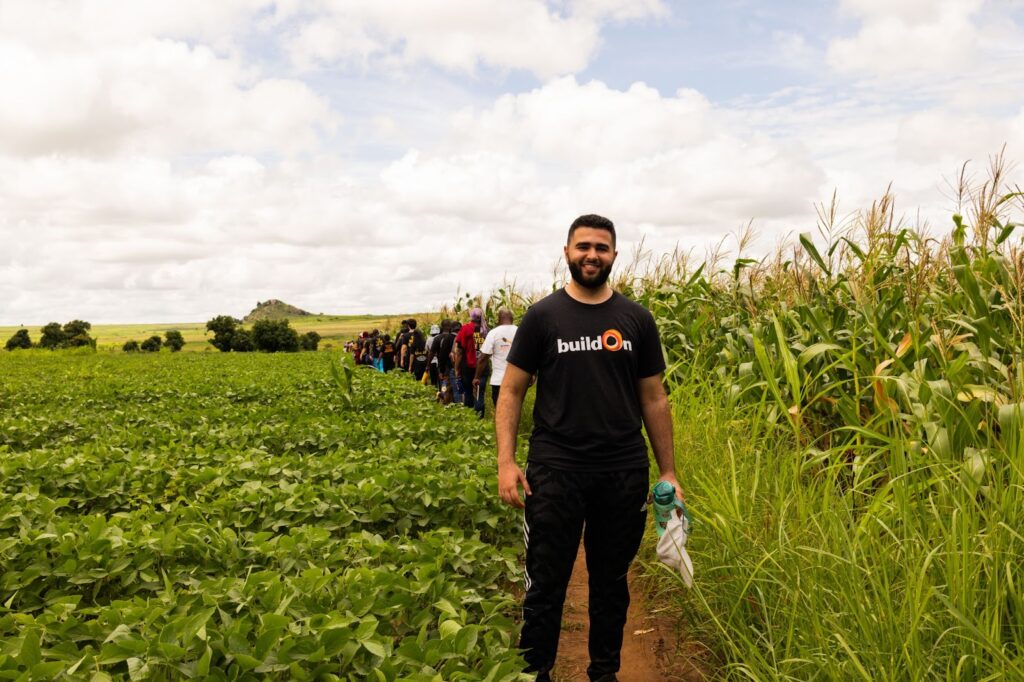
Becoming Something Bigger
So, back in Malawi, it was our last day on the work site. It wasn’t the last day of the construction, but the last day we were in the village. And there were 249 people on the work site. Way more people than we needed. So we decided to mix the concrete to pour the foundation and floor. It was 10,000 to 20,000 pounds of concrete. It was a big task. But we had a lot of people, the human chains naturally formed, and people were very exuberant and excited. Putting in the foundation of a school is a big step.
And everything was good until the sky opened up and it started to rain torrentially. And it did not stop. It dropped 20 degrees. I was freezing to the bone. Everybody was freezing. So within minutes, everybody ran and took shelter in the old school, which was just a building with a thatched roof. There were no walls and we were still getting wet. But one of the women started singing, and then more started singing. And then everybody started clapping and it turned into a dance party. In 33 years, I’ve never seen anything like that! I was just blown away.
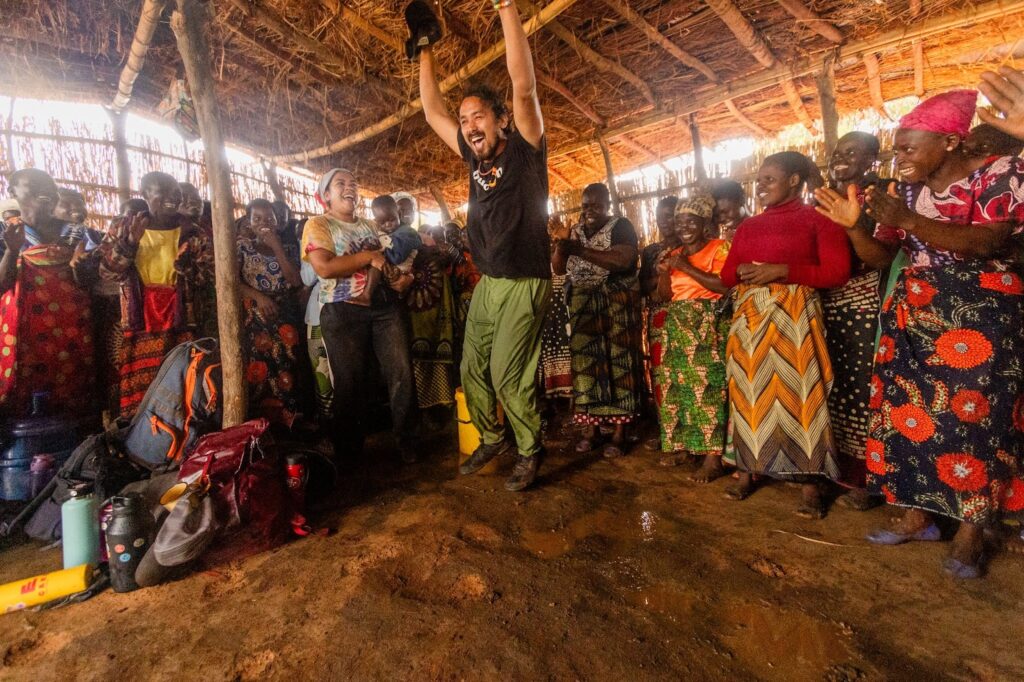
I don’t have any rhythm, so I didn’t want to go anywhere near the dance circle. But I was watching. And there was one guy still out on the work site, and I thought he was collecting tools or something. I didn’t know what he was doing. And it was raining so hard, I could barely see him. So I thought, well, I’ll go help him bring in the tools.
So I went out there and I thought it would be one of our skilled labor guys, or maybe a community member. But it was our country director, McDonald Chiputula. And he was mixing concrete. And I said, “McDonald, we’re having a dance party. Let’s go in over there.” “Jim, we can’t—we have to mix this concrete,” he replied. “If we don’t mix it, we’re going to lose it. And we can’t afford to lose it.” So I picked up a shovel, and I started mixing concrete. And this was the worst day of my buildOn career. My back was screaming. I had a new hip that didn’t like the whole idea of it, and I was just freezing to the bone. It was not going well for me. And I was ready to give up. And where were the 249 people? Where’d everybody go? Where’s the movement? And I was just about ready to quit and throw my shovel down and say, “McDonald, you got me here.”
But before I could, I looked up and everybody came back. 249 people back on the work site. We worked for three and a half more hours in the torrential rain. Nobody gave up, nobody stopped. We re-formed the bucket brigade. Aissatou and Jackie, remember them from the Bronx? They were in this thing. Nobody was stopping, nobody was giving up. Like Mohamad, we became part of something bigger. That’s what happened.
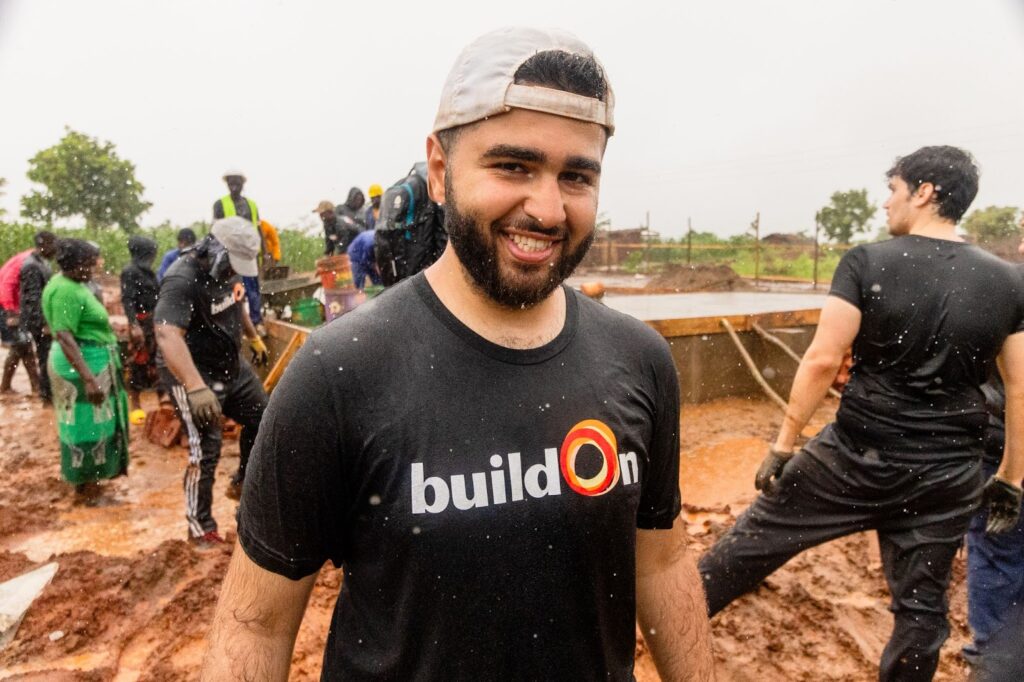
And what was the worst day ever for me turned into the best day of my life. Well, behind getting married and my first and second children being born. So the fourth best day. They’re in the front row here, so I better not screw this up.
buildOn is a Movement
Anyway, we were part of something bigger. It turned into an amazing experience that I will never, ever forget. And ladies and gentlemen, this is what we call a movement. So when we say we’re a movement at buildOn, this is what we mean. We’ve built 2,746 schools just like that. Communities uniting and organizing. And 84% of the villages where we build go on to build at least one more school without us. That’s ignition. That’s what we mean when we say ignition. We just light a fire. They keep going. They take it to new heights and new levels.
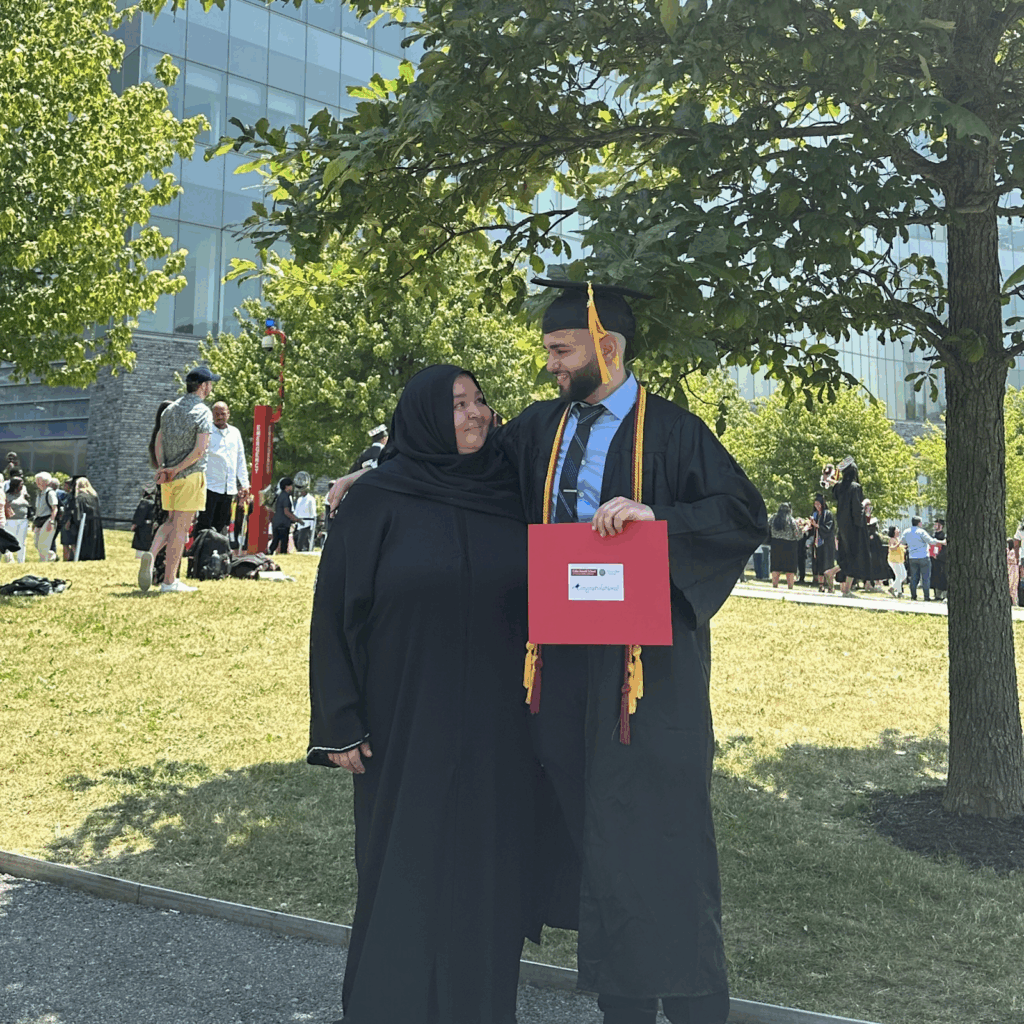
This is Mohamad on graduation day. But he’s not graduating from high school. He’s graduating from City College and that is his mother. And it’s incredible, because that can’t be his mother. His mother’s gotta be seven feet tall. She’s a total badass. She saved his family. She took the road through hell. But no, that’s her. And she’s just this tiny little person. You feel like you’re in the presence of greatness seeing her, looking up at her son, beaming with pride.
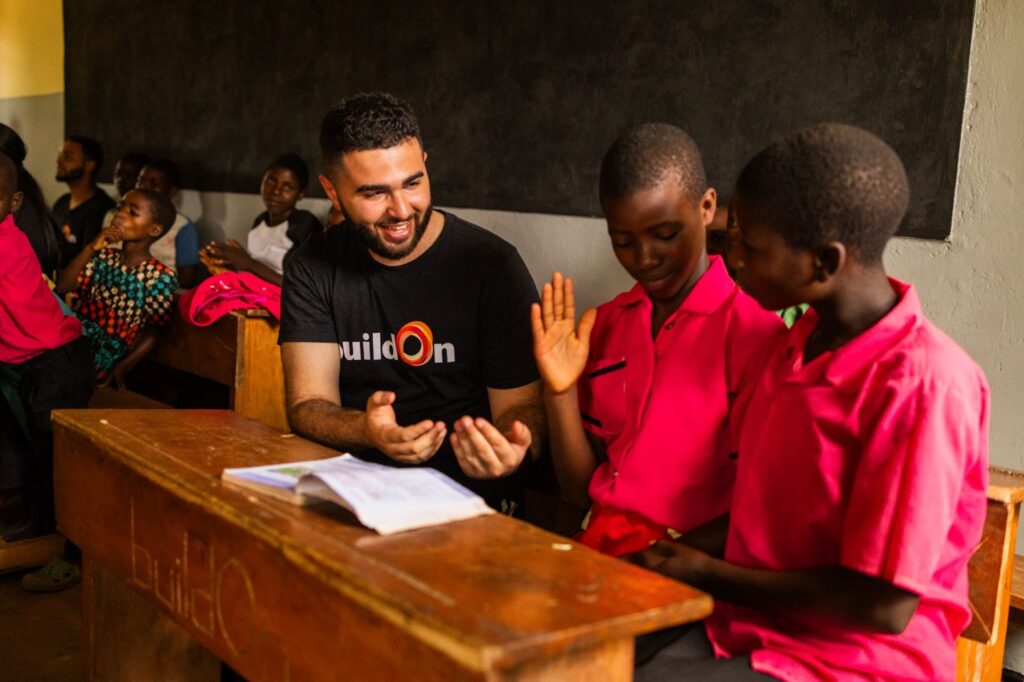
Mohamad couldn’t be here tonight because he is in medical school, and he has exams all week. But, believe me, Mohamad is just getting started. This guy is gonna light a lot of fires. And there are now 356,000 children, parents, and grandparents attending schools that we’ve built. Each and every one of them are lighting fires, and education is a fire that nobody can put out.
How does this happen? Why does this happen? It happens because you’re here tonight supporting us. And it happens because we never give up. God bless you all. Thank you for being here. I’m so grateful and honored to be part of this community.
Will you help us continue to light fires of change and unite communities? Please consider making a tax-deductible donation to buildOn today.