

Service: The Thread That Unites buildOn’s Work


A high school student keeps an older neighbor company. A mother carries construction supplies for her community’s new school with a baby wrapped on her back. People of all ages work side by side to build a school, even when they don’t speak the same language.
These moments happen in different places and look different from one another, but service connects them all. For us, service is how communities in low-income countries build their own schools, how American high school students strengthen their own neighborhoods, and how those same students help build schools around the world. In each case, service builds leaders.
From a neighborhood in the Bronx to a village in Senegal, that thread runs through everything we do. And over 35 years, the members of our movement have given more than 52 million hours of service in their communities.
What You’ll Find in This Story
- How communities in low-income countries build their own schools through service
- How high school students in the U.S. serve their own neighborhoods and build leadership along the way
- How the two come together on Trek, and what one Bronx alum learned from seeing the connection
Communities Build Schools Through Service
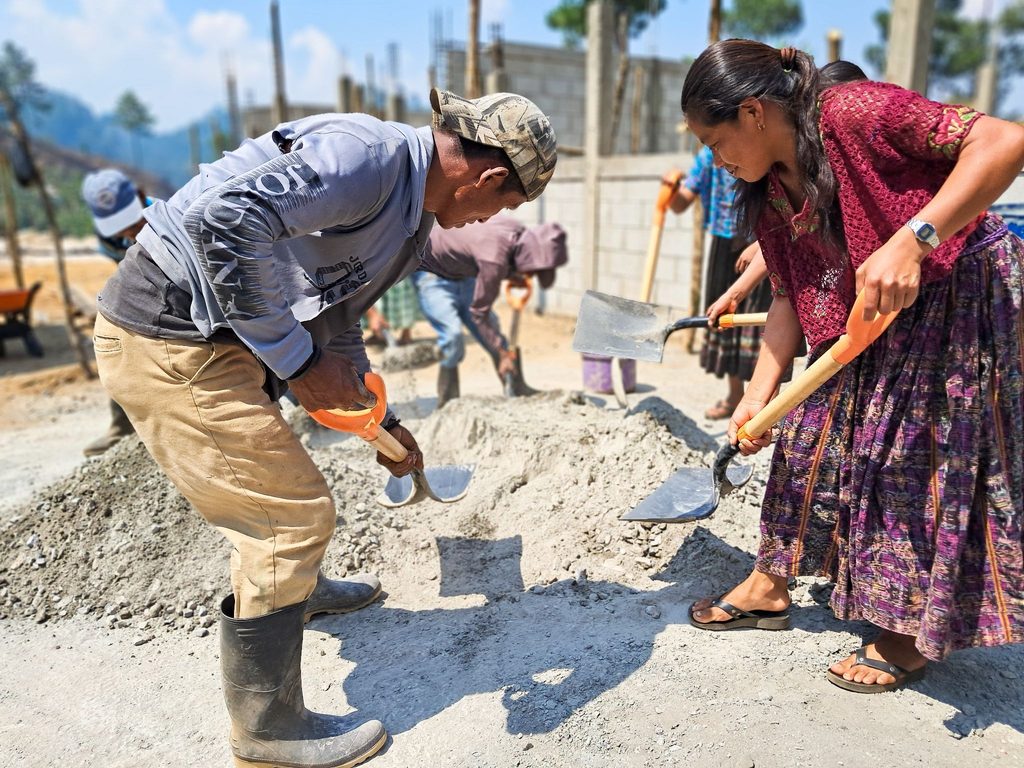
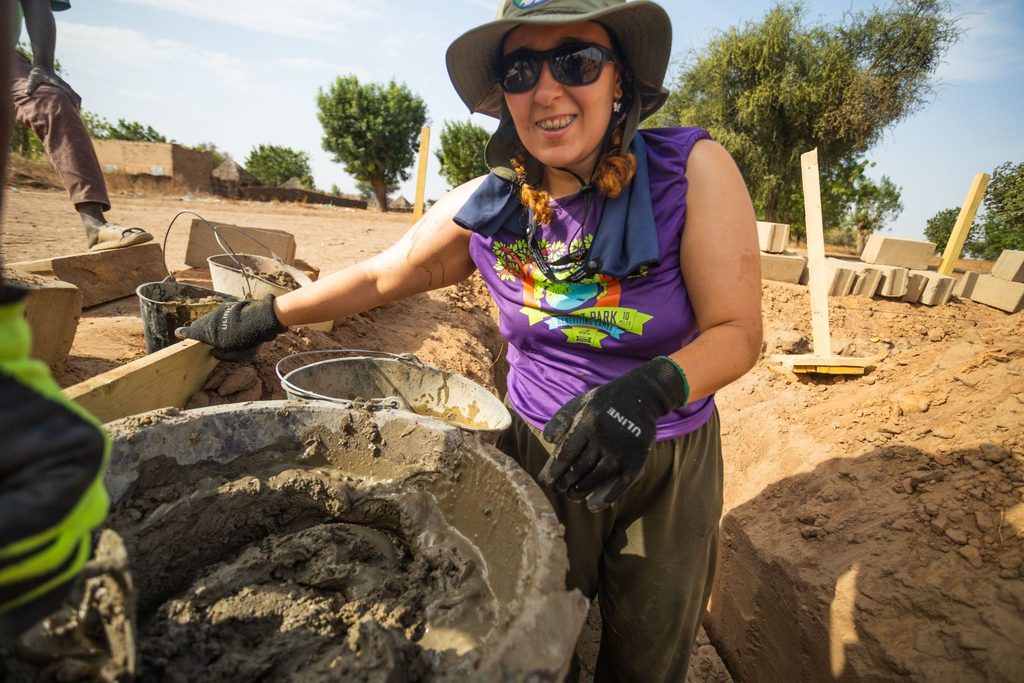
Abroad, our work starts with a community that wants a school. When a community partners with buildOn to construct one, residents commit their own time and energy to see it through, working side by side with our team. We provide the engineering, materials, skilled labor, and project supervision. The community provides the land, local materials, and volunteer labor, and a Project Leadership Committee of local leaders organizes the effort.
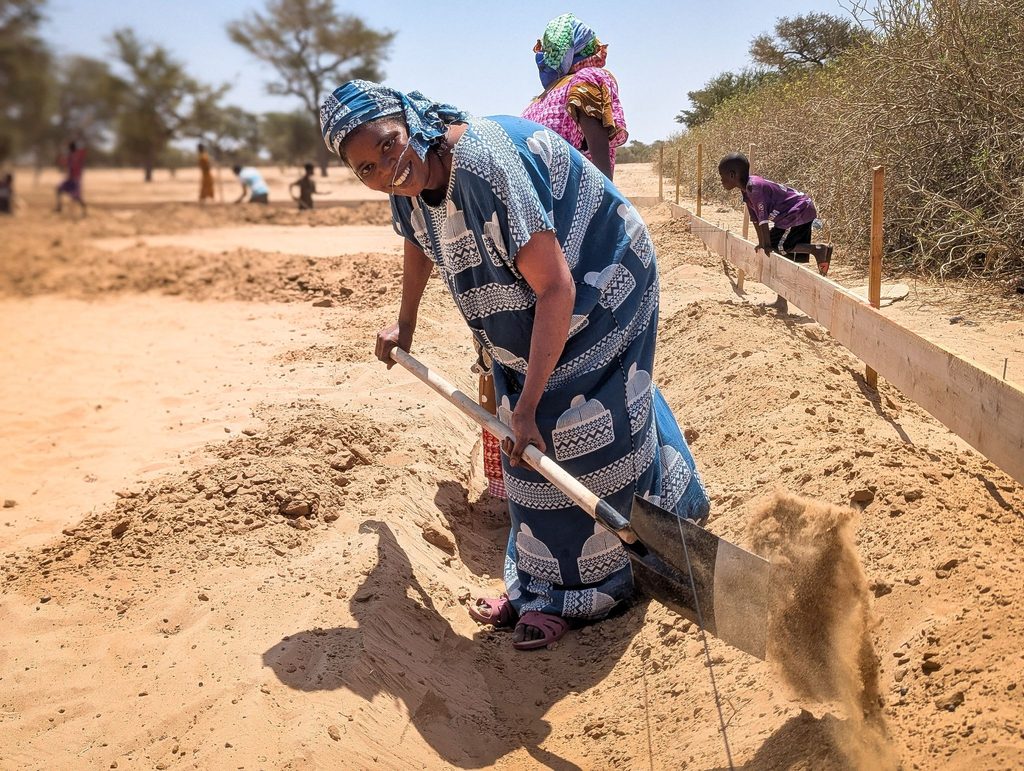
That partnership has built more than 3,360 schools, with communities contributing millions of hours of volunteer work along the way.
The service does not stop when the last classroom is finished. In a study of 30 communities in Senegal that partnered with us, 13 went on to build 31 more classrooms on their own. We call that pattern the Ignition Effect: a first school becomes a starting point, and people keep organizing, investing, and building.
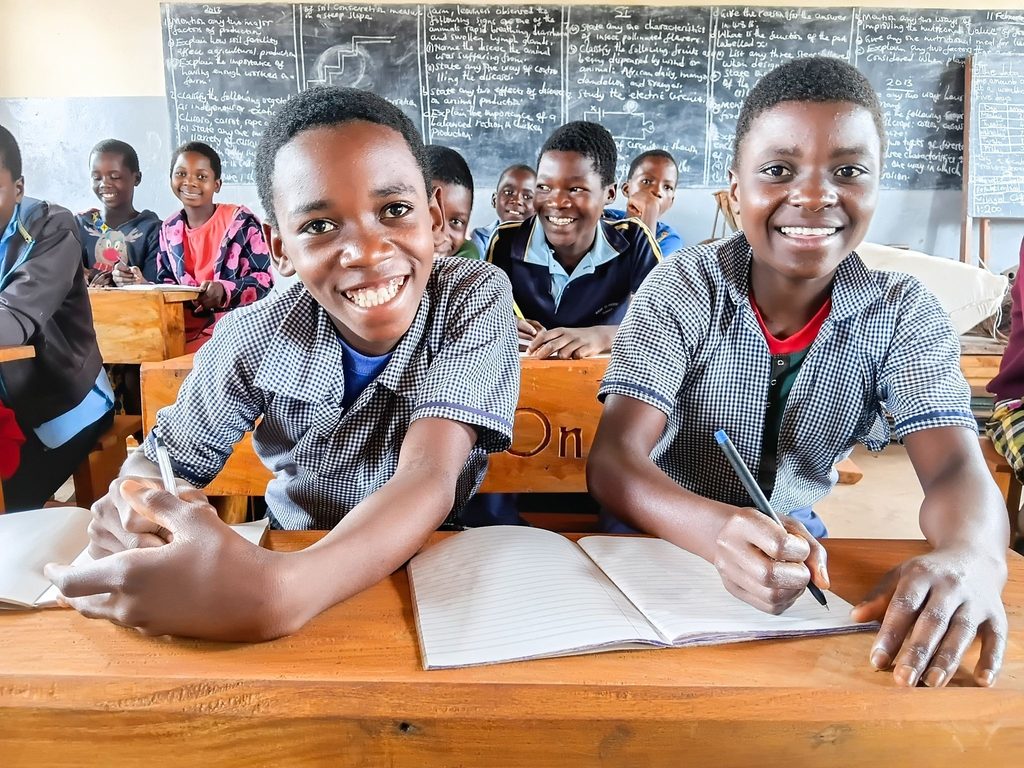
That is what service means at the center of our work. The people who will benefit from a school help build it, giving their own time, labor, and leadership as partners alongside our team. The finished classrooms matter, and so does what the community learns while building them: how to organize, make decisions together, and take on the next project. Service is how a school becomes a starting point.
Students Serve Their Own Neighborhoods
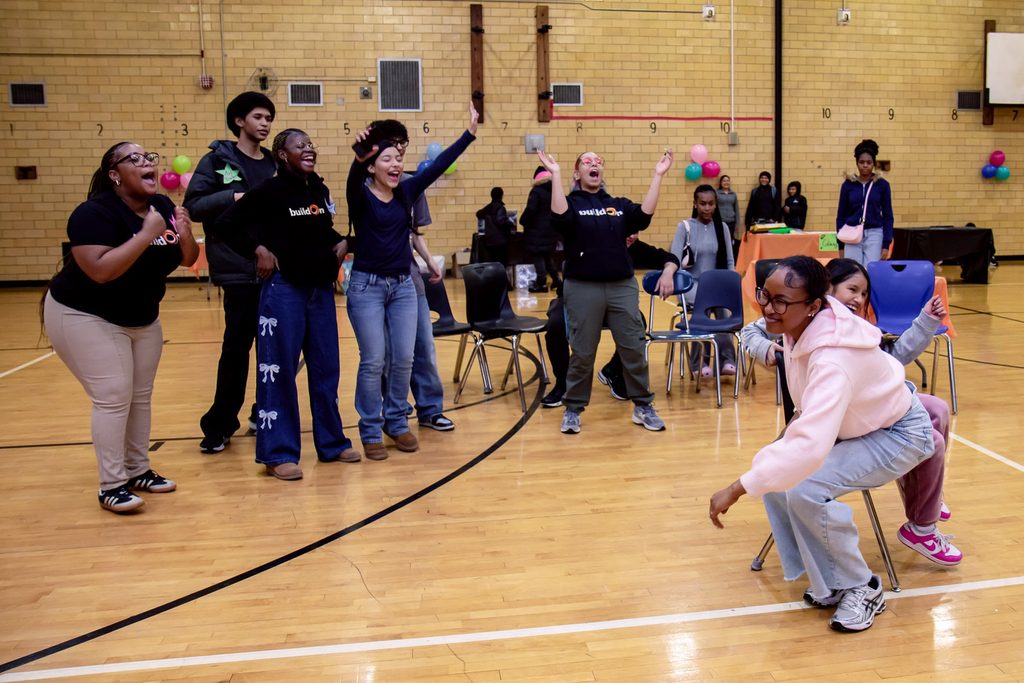
The same belief in service shapes our work in the United States. In 38 high schools across five U.S. regions (Boston, Bridgeport, Chicago, Detroit, and the Bronx), students plan and lead service-learning projects in their own communities. They tutor younger children, spend time at senior centers, distribute food, and take on the needs they see around them. Together, students in our programs have contributed more than 2.6 million hours of service.
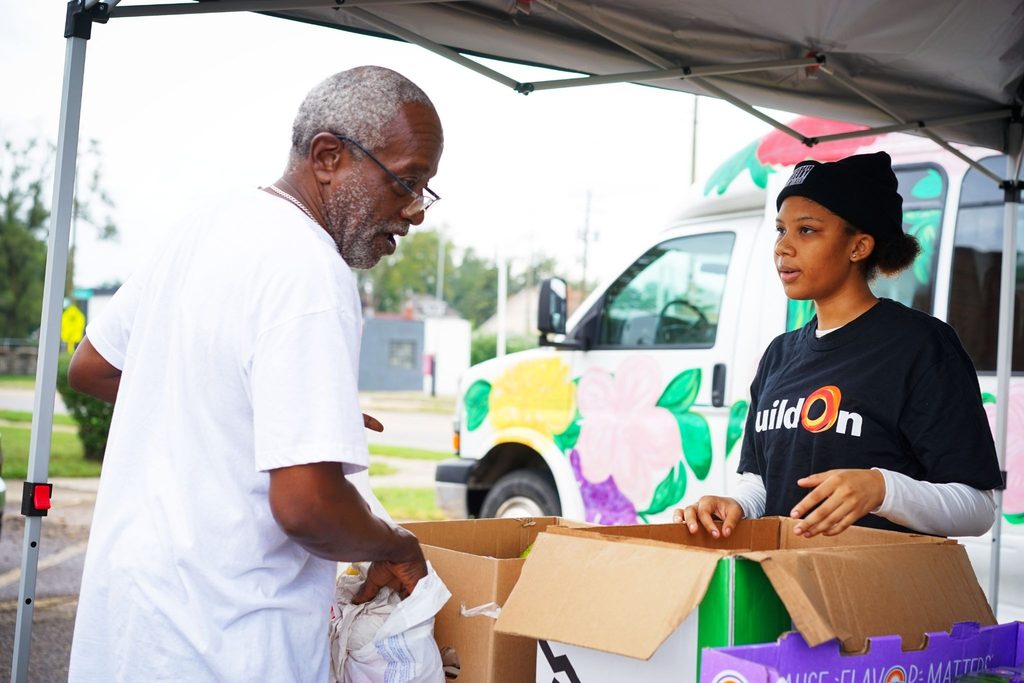
Serving this way builds leaders. A 2026 study of our work in the Bronx, independently validated by two NYU researchers using official New York City Public Schools records, found that buildOn students attend school more often and graduate on time and enroll in college at higher rates than matched peers. The more hours students spent in service, the stronger the results. Those findings are specific to the Bronx, but they show what happens when students are trusted with real responsibility.
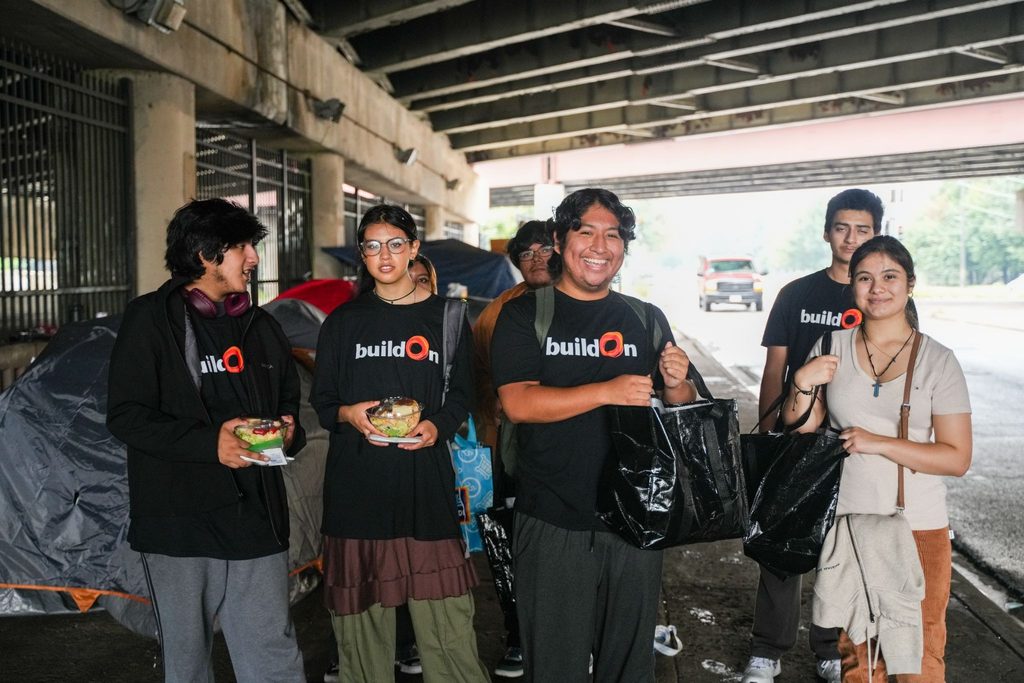
That trust is the heart of what service means to us. Students highlight a need they can see in their own neighborhood, give their own time to solve it, and take responsibility for following through. Leadership grows from that practice: planning the project, showing up for neighbors who are counting on them, and sticking with it.
Where the Two Meet
The two halves of our work come together on Trek. Committed students travel abroad, often for the first time, to help build schools alongside host communities, living with host families and working next to the neighbors and parents whose children will learn there.
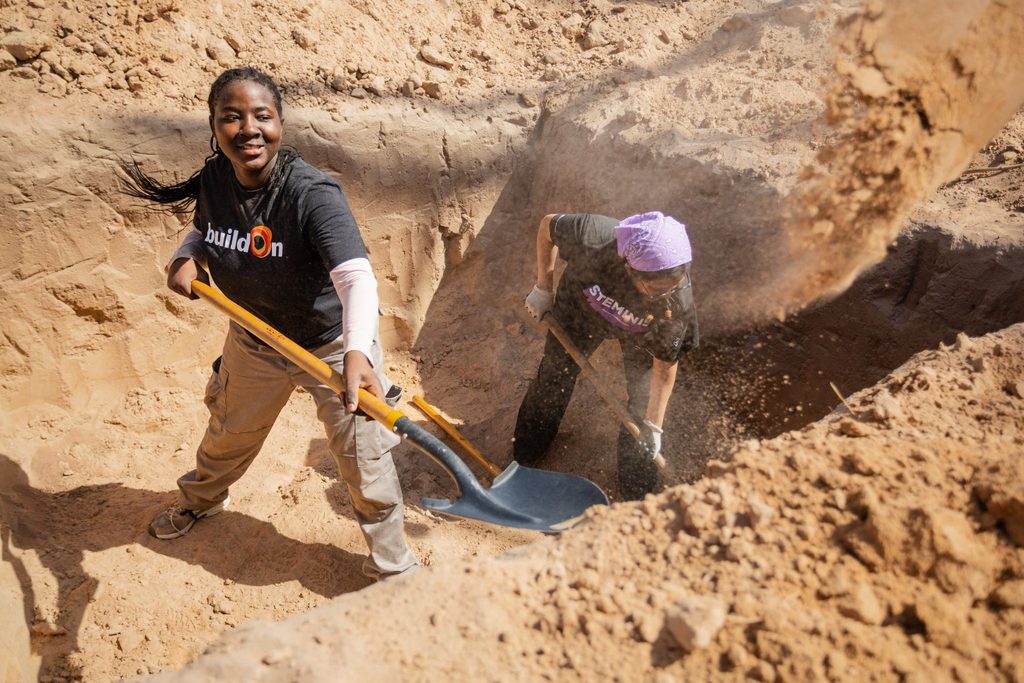
On the worksite, the service looks familiar from both sides. Community members are giving their time to build a school for their children, and students are giving theirs to help. Both have been showing up for others long before they meet, and building together shows each group what the other already knows.
Why Service Matters
Everything described so far rests on one deliberate choice: asking the people closest to a need to do the work of meeting it. Two reasons explain why that choice matters.
The first reason is that the people who live in a neighborhood or community understand it best. They know which problems are most urgent, what has already been tried, and what will work on the ground, so they need to play an active role in their own development. That idea echoes “Nothing about us without us”, a phrase long associated with the disability rights movement, which holds that the people affected by a decision should help make it. Service puts that principle into practice. When residents build the school, or students lead the project, the people closest to the need are the ones deciding what to do about it.
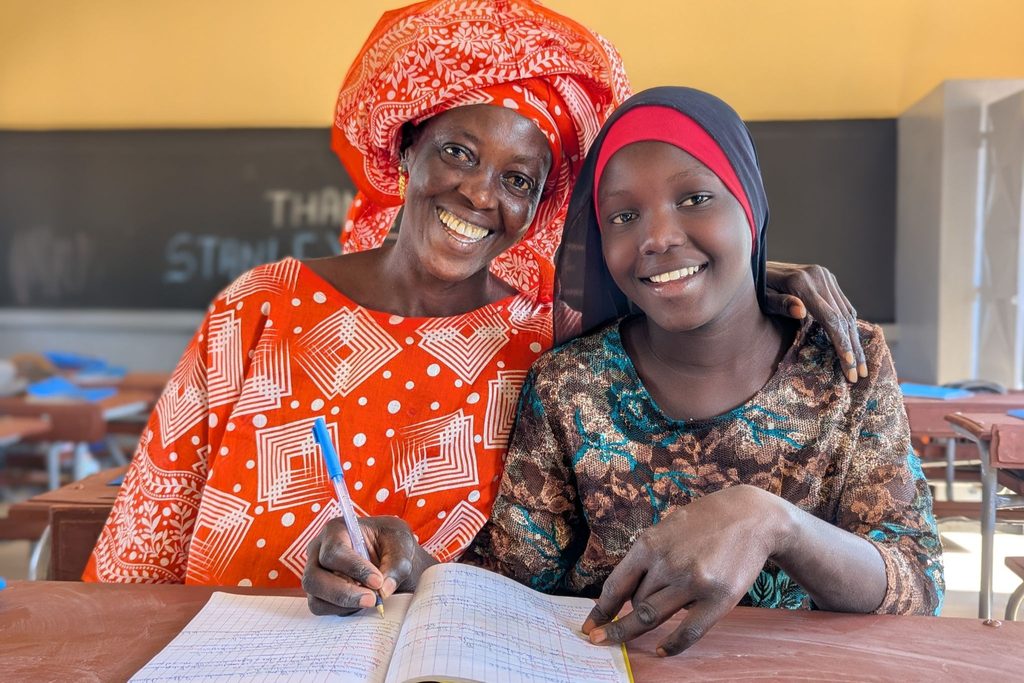
The second reason is ownership. People look after what they help create. A parent who helped build a school is more likely to send their child there and to keep the building in good repair, and the covenant each community signs includes a promise to send girls and boys to school in equal numbers. Service also gives people something to do about problems that can feel too big to take on. For a student in an under-resourced neighborhood, or a parent in a village without a school, taking action replaces helplessness with the knowledge that change is within reach.
What One Alum Saw in the Connection
Leila Tazi grew up in the Bronx and joined us in her freshman year of high school in 2016. She started volunteering with her sister as a way to explore her city, and she stayed because of the people. Today, much of her service is rooted in mutual aid, including regular volunteering at food distributions across the city.
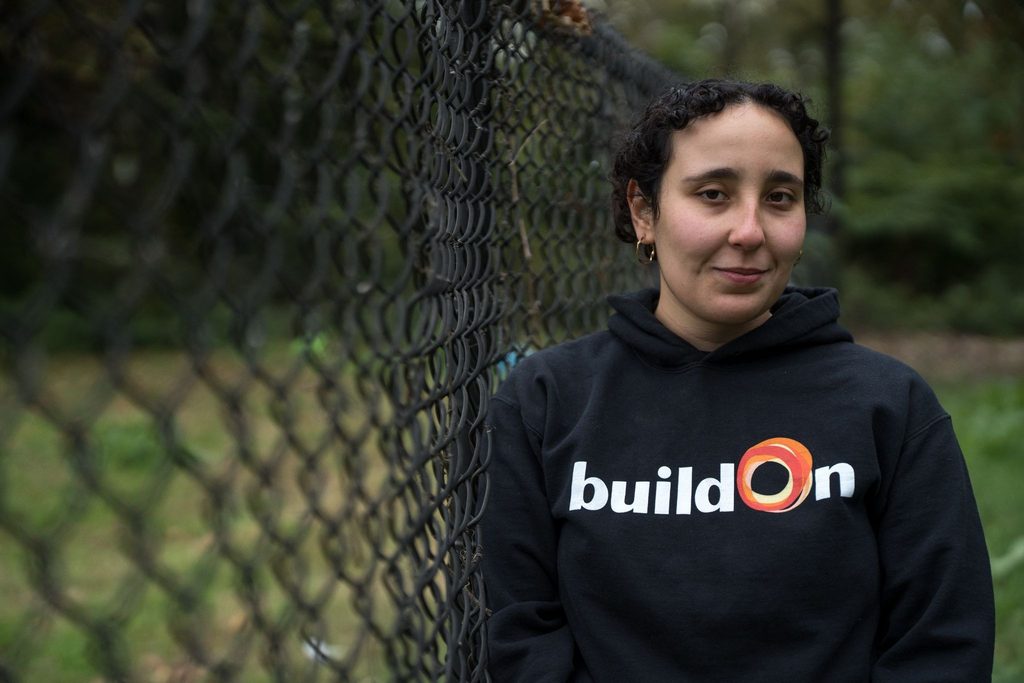
In February, Leila went on Trek to Senegal, where she saw how the work she does at home connects to the work abroad. “When I do work in the Bronx, I see how it connects to the work in Senegal and in every country. We are all connected,” she says. “Whether it is a child in the Bronx or a child in Godji, Senegal, both deserve access to education and opportunities.”
For Leila, that connection comes with a commitment. “Community is something we build, and something we have to keep showing up for.”
One Movement of Service
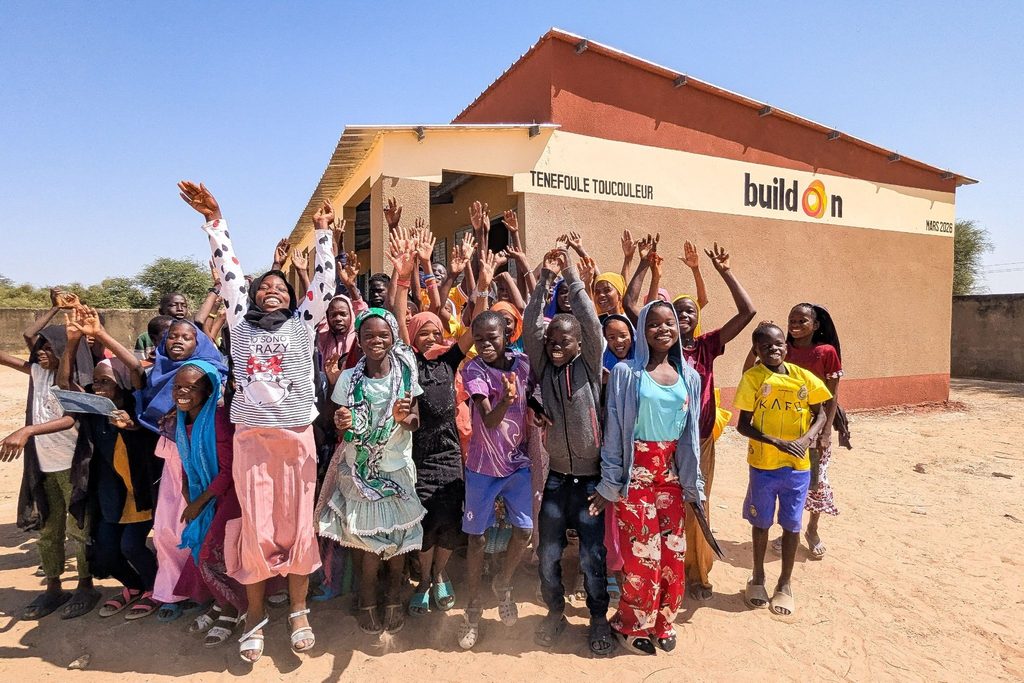
Service builds leaders, and leaders ignite opportunity. In a neighborhood in the Bronx and a village in Senegal, that idea looks the same: neighbors showing up for one another, and then building something that lasts.
Want to be part of a movement built on service? Consider making a tax-deductible donation to support buildOn’s work today.