

Why Is Literacy Important?


Right now, 750 million people around the world cannot read or write. Nearly two out of three of them are women.
Literacy decides whether someone can read a prescription label, sign their own name instead of using a thumbprint, manage their family’s money, or help a child with homework. It’s one of the simplest tools a person can have, and one of the hardest to get once childhood has passed.
Here’s what being illiterate actually means, and what changes once a person finally learns to read and write.
What You’ll Find in This Story
- What the data says about literacy, poverty, and opportunity
- What changes when adults get the chance to learn to read, write, and do math for the first time
- Three stories, in their own words, from people who enrolled in buildOn’s Adult Literacy Program
What Happens When People Can’t Read or Write?
The seeds of a life without literacy are often planted early. Worldwide, 58 million children of primary school age aren’t in school at all. Without that foundation, illiteracy often follows people into adulthood: today, 12% of adults cannot read or write.
Numbers like these can start to feel abstract. In practice, illiteracy touches almost everything.
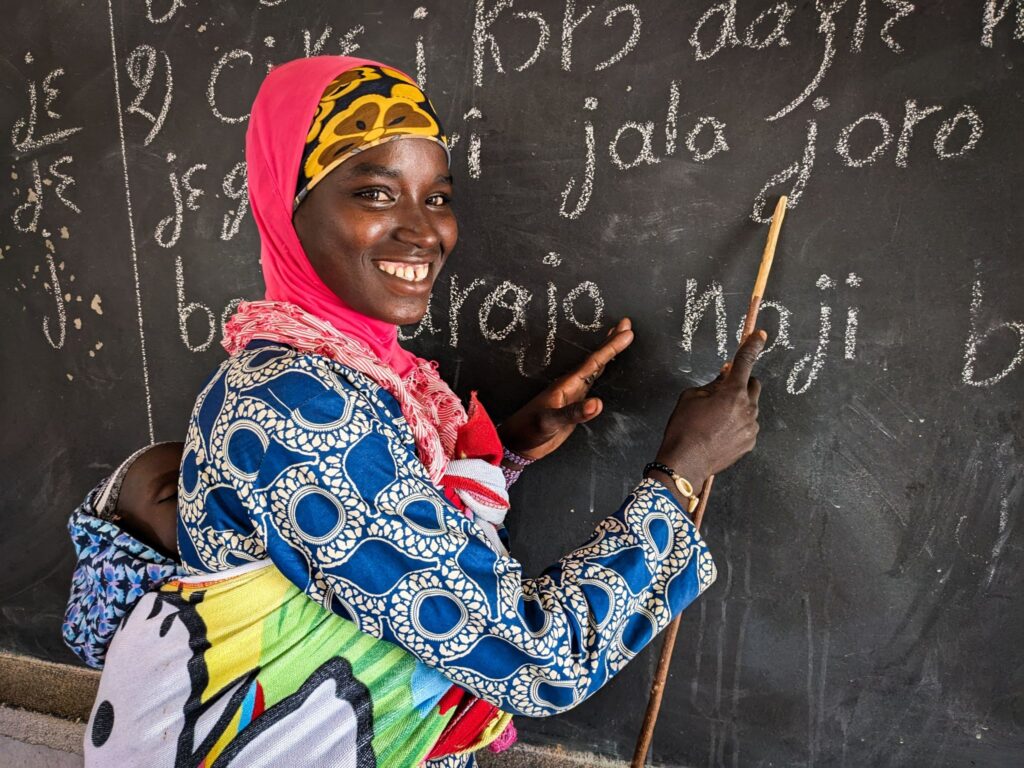
At the market, it can mean being unable to double-check a receipt or compare prices, and simply trusting that no one is taking advantage of you. At a clinic, it can mean nodding along to instructions you won’t be able to read back later when you actually need them. A bus schedule, a ballot, a bank form, a land deed: each one is a small wall between a person and the freedom to handle their own life without asking for help.
None of this is about intelligence or effort. It’s about access. Somewhere along the way, school was too far away, too expensive, or simply not open to them. The gap it leaves behind can follow someone for decades until something changes.
The cost isn’t only personal. According to research, illiteracy costs the global economy $1.19 trillion a year in lost earnings and productivity. No country has ever sustained rapid economic growth without at least 40 percent of its adults being able to read and write.
Why Does Closing This Gap Matter So Much?
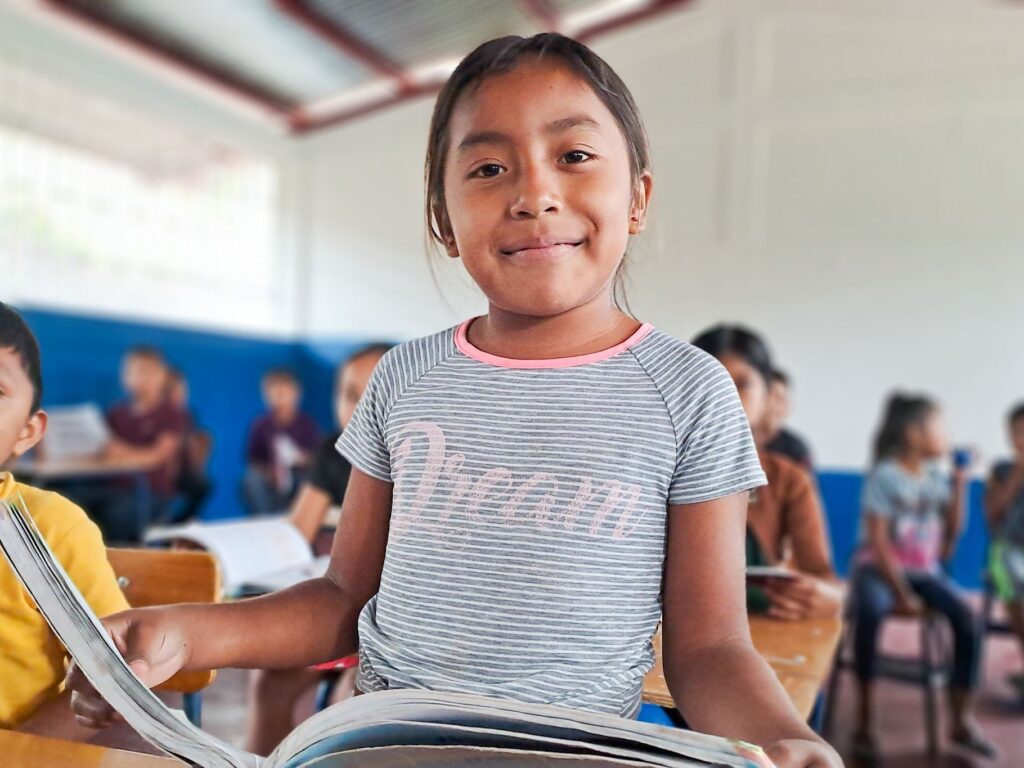
According to UNESCO, if every student in low-income countries left school with basic reading skills, an estimated 171 million people could escape extreme poverty. That’s a 12 percent reduction in global poverty from one skill.
Education does more than raise incomes. Children born to educated mothers are 50 percent more likely to survive past age five. Communities with stronger literacy report better health outcomes, more stable income, and a stronger voice in local decisions.
What Does the Data Show About Adult Literacy?
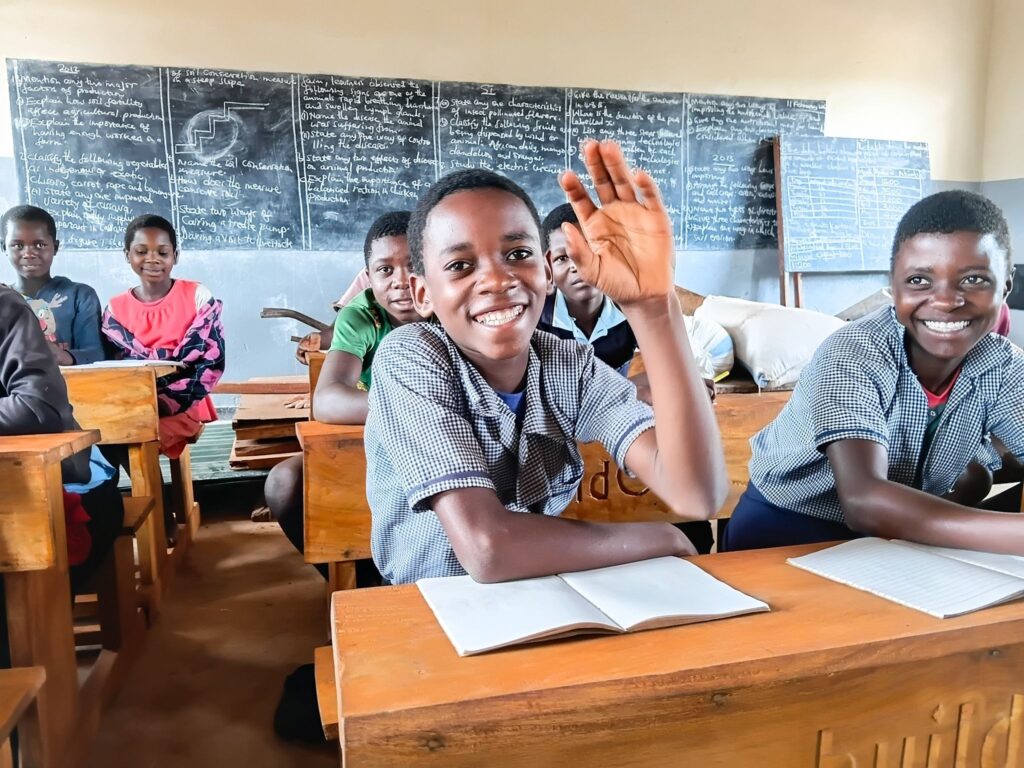
A 2026 independent study of buildOn’s work across 30 communities in Senegal looked specifically at what happens when adults get access to literacy classes.
More than 92 percent of participants reported improved ability to read important documents. Nearly 95 percent said they felt more confident working with numbers. More than 88 percent said they could complete forms and paperwork on their own for the first time.
The economic effects were just as clear. Families in buildOn’s income-generating activities program saw average monthly household income rise from $84 to $129, a 54 percent increase, in communities where most families live on less than $2 a day.
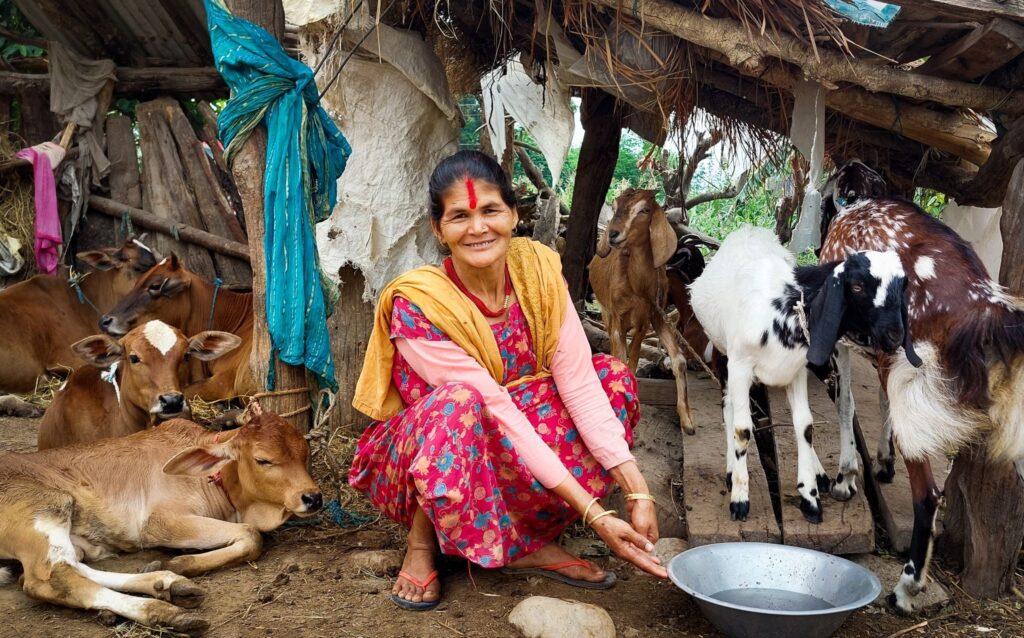
buildOn currently runs Adult Literacy Programs in Burkina Faso, Haiti, Malawi, Mali, Nepal, and Senegal. Classes are taught by community members trained by buildOn, in the same schools where participants’ own children study during the day. Students spend their first six to twelve months learning to read, write, and do basic math, then apply those skills through income-generating work they choose themselves, from beekeeping to textile production. Since the program began, more than 49,000 adults have completed it, 82 percent of them women.
Three People Who Are Changing Their Own Story
Numbers explain the pattern. These three stories explain what it feels like on the ground.
Aiso Thama, 67, Arnikobasti, Nepal
Aiso Thama spent most of her life caring for others. As a girl, there was no time for school, and for her generation, there often wasn’t a choice. “I had the responsibility of child rearing, and at that time, girls did not have the right to attend school,” she says. “That is why I’ve never been to school.”
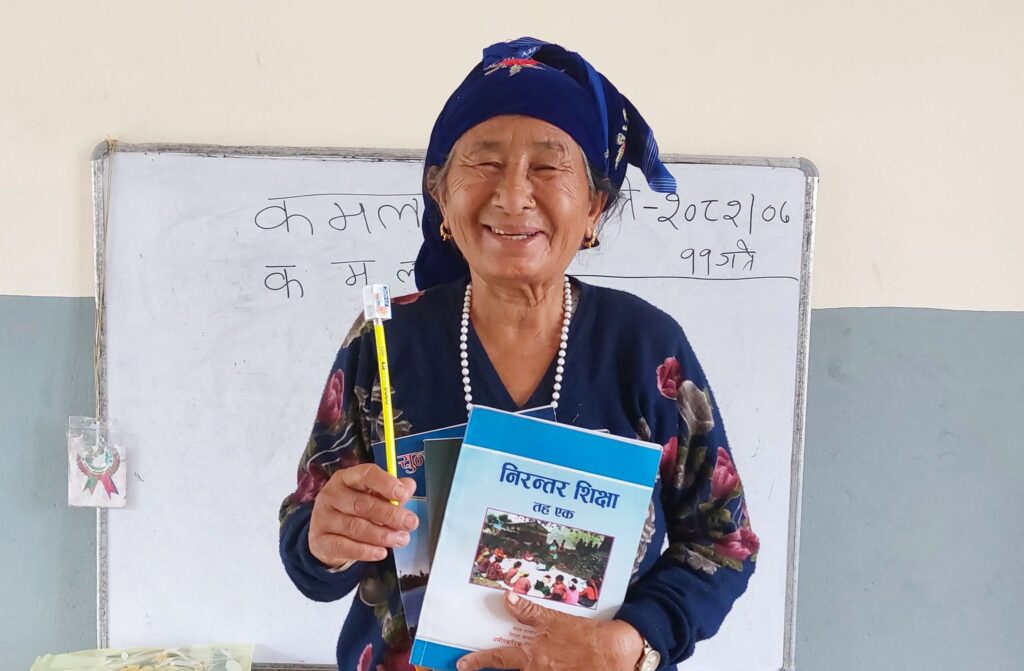
Now she’s choosing a different chapter. “First, I want to write my name on my own, that way I do not have to use my thumbprint,” she says. “This is why I enrolled in this program.”
Aiso walks to class with the same resolve she once brought to raising a family, tracing each letter until the shapes feel familiar in her hand. “So far, I have learned the alphabet!” she says.
Mouhamadou Togola, 49, Togo, Mali
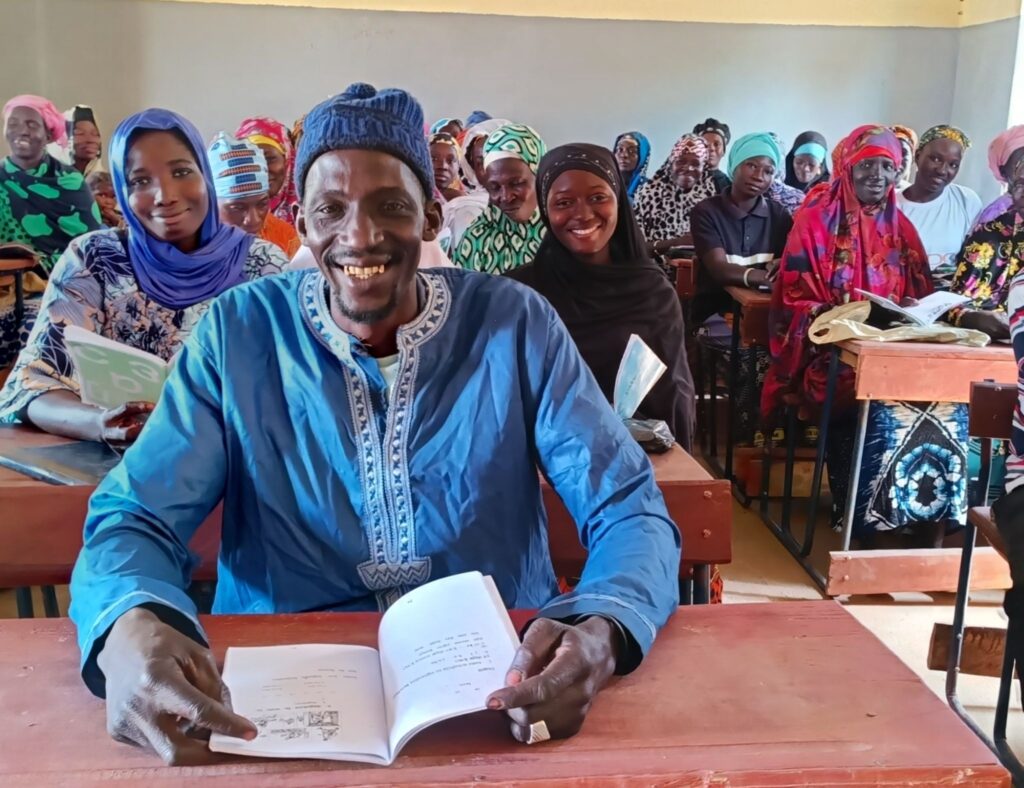
Mouhamadou Togola never had the chance to go to school. “My parents did not like the academic system,” he says. “They refused to enroll me in school.”
Decades later, a different path opened: buildOn’s Adult Literacy Program. A father of eight, Mouhamadou enrolled for the first time in his life. “I enrolled myself in this program so that I can learn to read and write,” he says. “At this point, I have learned to read and write my name, and I can also write numbers.”
At nearly 50 years old, Mouhamadou shows us that it’s truly never too late to learn—and to change your life.
Aissatou Mbaye, 35, Thiadaby, Senegal
Growing up, the nearest school to Aissatou Mbaye’s home was seven kilometers away, too far for her parents to risk sending her alone. She spent her childhood helping her mother instead. “I didn’t have the chance to go to school as a child, and I regret it very much, because education opens so many doors,” she says.
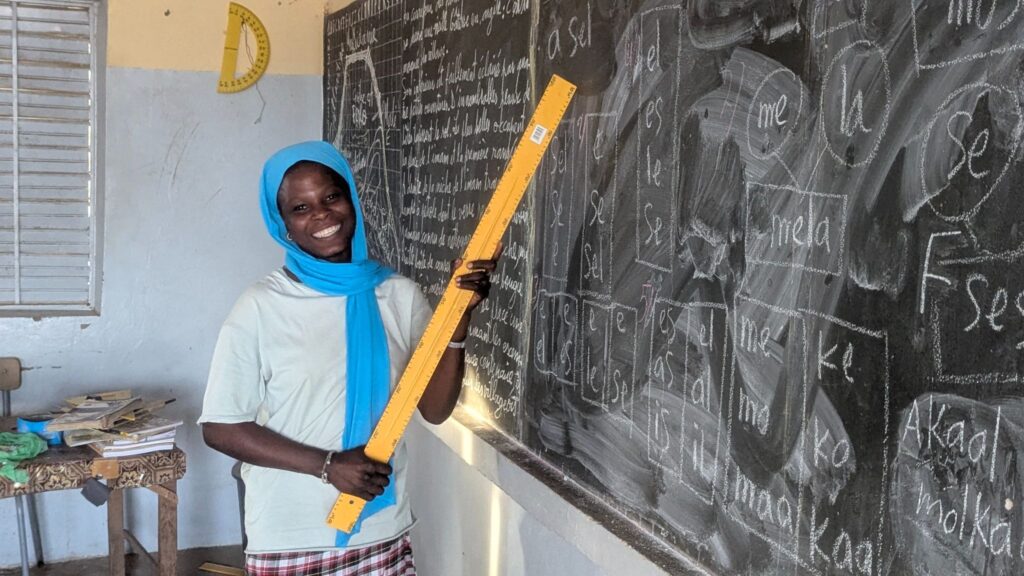
Today, Aissatou trades dried and smoked fish to help support her five children, four of whom are in school. Enrolling in the Adult Literacy Program gave her something she’d wanted for a long time. “Today, I know how important education is, because it puts you in a privileged position in the community and gives you many opportunities in life,” she says.
Her children notice the change in her, too. Every day after class, they ask what she’s learned. “I am proud of myself when I see them interested in what I’m doing at school,” she says. “I hope my efforts show them that learning is valuable, and that it can change lives.”
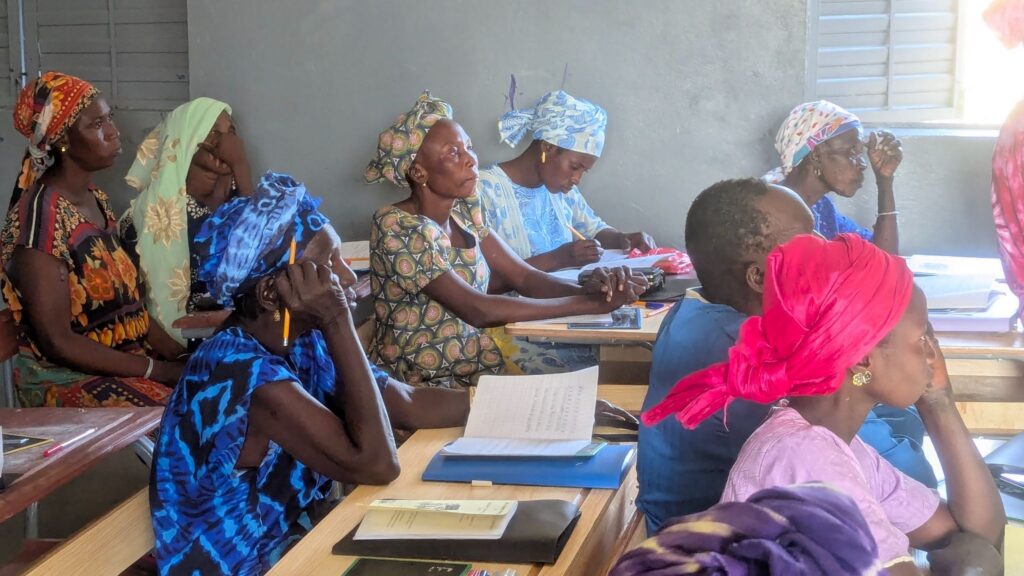
“I hope my efforts show [my children] that learning is valuable, and that it can change lives.”
Aissatou Mbaye, Adult Literacy Program participant, Senegal
Why This Is Worth Investing In
Literacy alone doesn’t end poverty. But it’s one of the clearest, most measurable places to start, and the data above shows why: better health, stronger income, more confidence, and a foundation the next generation can build on.
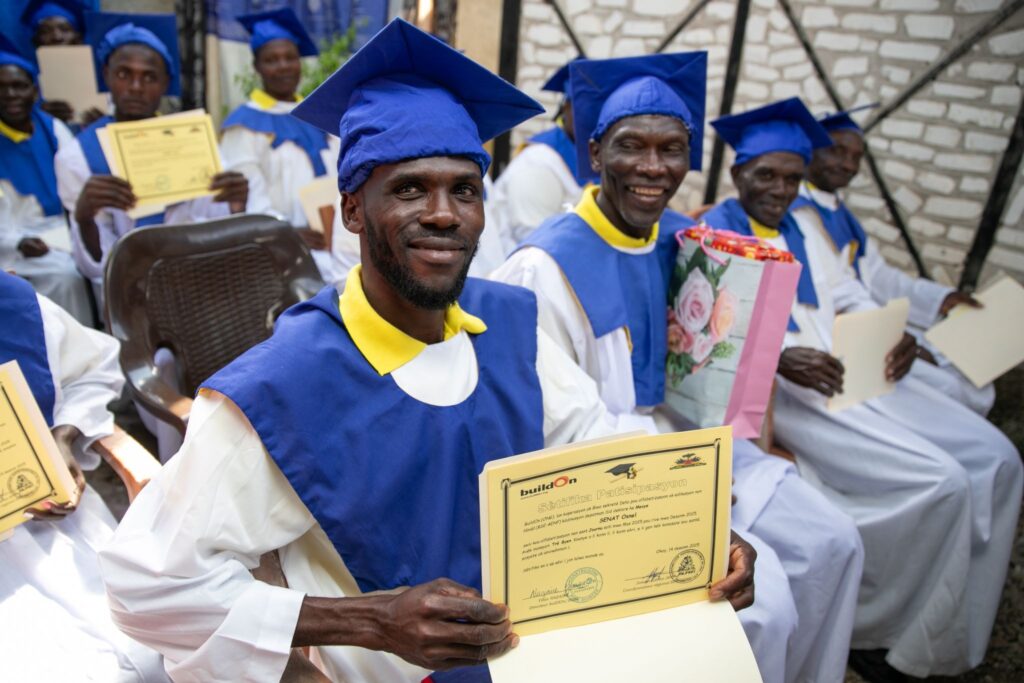
But the impact can be seen without any data at all. It’s in a mother finally being able to help her child with their homework. A father signing his own name for the first time. A door that stood closed for decades swinging open, and beyond it opportunity and a better life.
That’s what a foundation looks like: strong enough to hold one person up, and built to carry whoever comes next even further.
Want to stay on top of our work to promote literacy around the globe? Sign up for buildOn emails today.
If you want to help fund our transformational Adult Literacy Program, consider making a tax-deductible donation to support buildOn’s work today.